
Episode 34: Big Beautiful Bill - How Private Equity is Profiting from Immigrant Detention
H.R. 1, the so-called One Big Beautiful Bill Act, expands the Deportation Industrial Complex, allocating more than 170 billion dollars over four years for border and interior enforcement, with the explicit goal of deporting 1 million immigrants every single year.
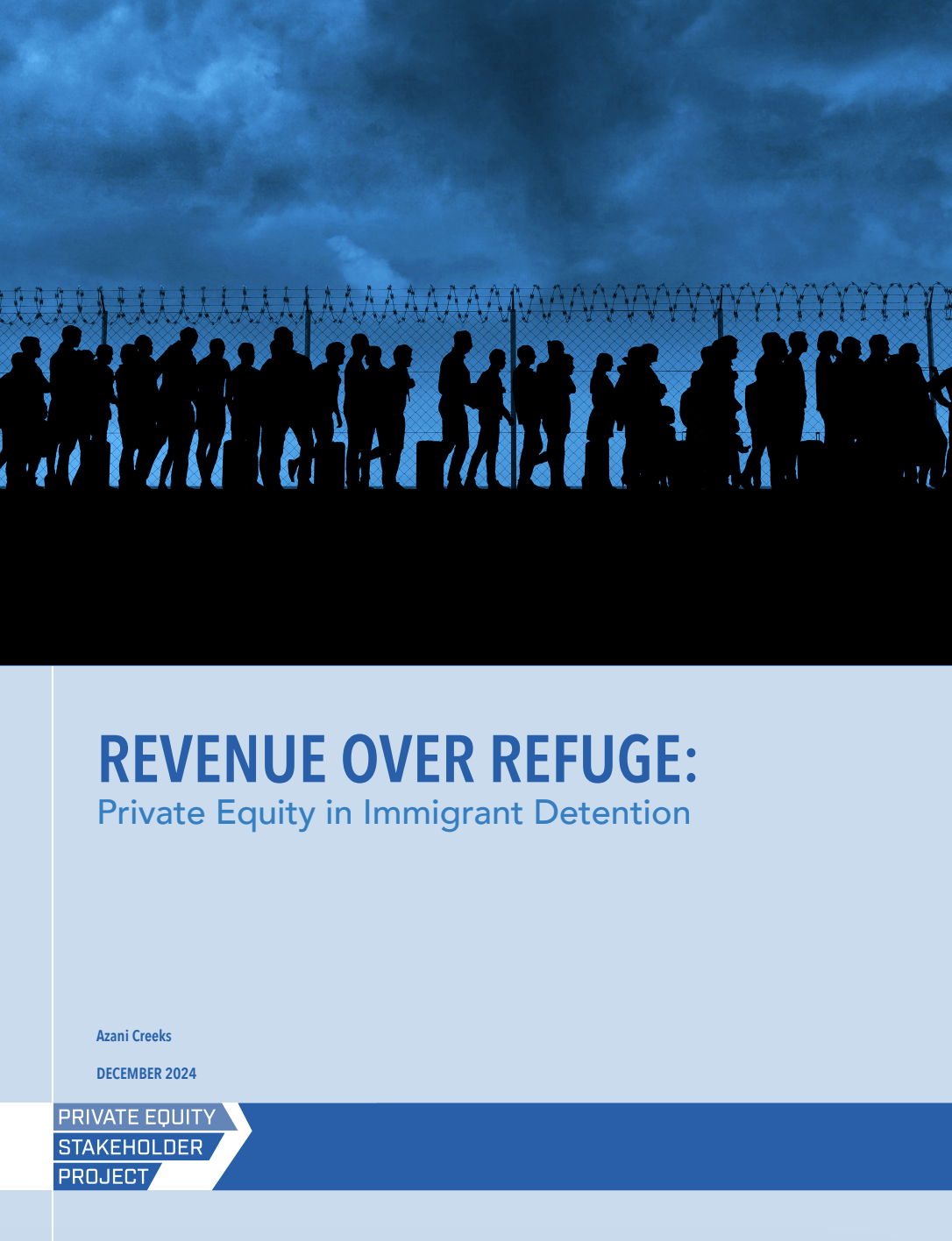
Behind those staggering numbers lies another story: who profits. Among the biggest winners are private equity firms and the billionaire class they represent. From building detention centers and surveillance systems to running telecommunications and healthcare inside facilities, private equity has positioned itself to cash in on every step of the deportation pipeline.
In this episode of the Art of Citizenry Podcast, host Manpreet Kaur Kalra is joined by Azani Creeks, Senior Researcher at the Private Equity Stakeholder Project to unpack how this bill opens the floodgates for private equity firms to profit from detention, deportation, surveillance, and border militarization as engines of profit for billionaires.
What You’ll Hear in This Episode:
How H.R. 1 supercharges ICE funding and detention capacity.
The role of private equity in profiting from detention, deportation, and surveillance.
Why firms like CoreCivic, GEO Group, and their Wall Street backers are among the bill’s biggest winners.
The broader pattern of immigration enforcement as a business model—and what this means for the future.
🎧 Tune in as we ask the deeper questions – about how policy, profit, and power converge in the Deportation Industrial Complex.
Meet Our Guest
Azani Creeks is a Senior Research and Campaign Coordinator at the Private Equity Stakeholder Project, where she focuses on private equity's impacts on workers and incarcerated people. Prior to joining PESP, Azani worked in the strategic research departments of the International Brotherhood of Teamsters in Washington DC and conducted research on companies profiting from border militarization for the American Friends Service Committee.
The Private Equity Stakeholder Project (PESP) is a nonprofit watchdog organization focused on the growing private equity industry and its impacts on people and the planet.
A note from our guest:
While public and investor debate around the privatization of prisons, jails, and detention facilities has largely focused on publicly-traded corporations, private companies control a much larger portion of this market. The private equity-owned companies that provide phone and video services, commissary services, medical services, bail bonds, ankle monitors, facial recognition technology, and more to detention facilities, governments, and other businesses belong to a growing detention and surveillance industry that poses significant risks to civil rights and liberties. The tools and services provided by private equity-owned companies in this sector disproportionately impact working-class, Black, indigenous, and immigrant communities. In some cases, particularly in critical services like food and medical care, profit motives lead to dangerous cost-cutting measures that negatively impact an already vulnerable population.
Big Business in Prison and Detention is Not New
The influx of funding under H.R. 1 has unleashed a historic expansion of ICE’s detention apparatus. The rush to spend has predictably funneled vast sums to private prison contractors — most notably GEO Group and CoreCivic, which already held nearly 90 percent of ICE detention beds.
Historically, the private prison sector was born in the 1980s amid Reagan-era sentencing policy escalations and the War on Drugs, as companies like Corrections Corporation of America (now CoreCivic) won their first ICE-linked contract in 1983, laying the groundwork for the prison‑industrial complex in which incarceration became more than a state function. They became a very profitable industry. Over decades, these firms cultivated immense political influence, lobbying and donating to lawmakers and administrations to ensure stricter immigration enforcement and wider detention infrastructure expansion.
Detention, deportation, immigration have always been very profitable for the United States, which was built on the backs of people who were forcibly detained and brought here. It's always been part of our profit model to exploit people who were forcibly brought here or who immigrated here looking for a better life. —Azani Creeks
In the current surge, ICE acted months ahead of passage of the bill, issuing emergency solicitations and expedited RFPs in spring 2025 to expand bed capacity, giving corporate operators time to repurpose dormant prisons and spring into action as soon as the funds passed. All of this unfolds amid aggressive rollback of oversight as the administration has gutted key DHS oversight offices and resisted Congressional scrutiny. Meanwhile, conditions in detention centers remain grim, with rising reports of human rights violations, with at least 11 deaths in detention reported according to official ICE reporting records.
With little oversight, corporations that profit from the detention of immigrants continue to cut corners to maximize their own profits — with private-equity commissary providers marking-up the price of basic hygiene items like toothpaste by 300 percent or more, healthcare contractors delaying treatment or denying access to necessary medications, and food contractors normalizing poor hygiene and expired food. From prolonged detention to the liberal use of solitary confinement, immigration detention exists as a profit-generating industry. With corporations and private equity firms remaining the primary winners.

Funding Immigrant Detention is about Profit, Not Security
In episode 19 of Art of Citizenry Podcast, we spoke with Anthony Enriquez, VP of U.S. Advocacy and Litigation at RFK Human Rights. During that conversation, he reminded us just how broken the system truly is.
“The U.S. spends three times as much on detention as we do on immigration courts and immigration officers to adjudicate asylum claims or other visa benefits. One way in which the system is clearly skewed is that we're funding detention, but we're not funding the underlying mechanisms that could make detention unnecessary. If asylum officers or if immigration officers had more resources to fund visa applications, to fund the adjudication of those applications, to decide claims, then we wouldn't see so many people in a backlog of the immigration system, and we wouldn't have to detain those people because their claims would be decided right away.” — Anthony Enriquez
This imbalance highlights how the system has been engineered to treat detention and imprisonment as a business model. Profiting off of the incarceration of people incentivizes more resources being funneled into the capture and detention of individuals nationwide. With corporate giants and federal government agencies in partnership, we’re seeing an unprecedented, shameless effort to normalize mass detention at any cost. By starving immigration courts and asylum processing while pumping billions into cages, the government ensures a steady stream of people pushed into private detention centers and corporate contracts. The backlog isn’t an accident—it’s a feature that sustains profits for prison operators, healthcare contractors, and service vendors who make money off every day a person is locked up. What gets framed as a crisis of migration is, at its core, a crisis of profiteering.
Resources
Select Citations & References
A lot of our pension dollars, our public dollars are actually invested into these private equity firms and funding them and making them work. —Azani Creeks
Support the Podcast
Art of Citizenry is 100% listener-supported. Every contribution helps us continue producing research-intensive episodes and paying our small but mighty team. If this episode resonates with you, consider supporting our work:
💸 One-time contribution: Paypal
💌 Monthly support: Patreon
✍️ Subscribe to us on Substack & upgrade your account to paid
Thank You for Listening
Please subscribe and leave a five-star review for Art of Citizenry wherever you listen to podcasts. Also, follow along and share your thoughts on Substack - artofcitizenry.substack.com.