
Episode 31: Genocide's Corporate Sponsors
The genocide unfolding in Gaza is being sustained by corporate interests. In this episode, we unmask the corporations and governments underpinning Israeli occupation by diving into the findings of a landmark report by Francesca Albanese, the United Nations Special Rapporteur on the situation of human rights in the occupied Palestinian territory.
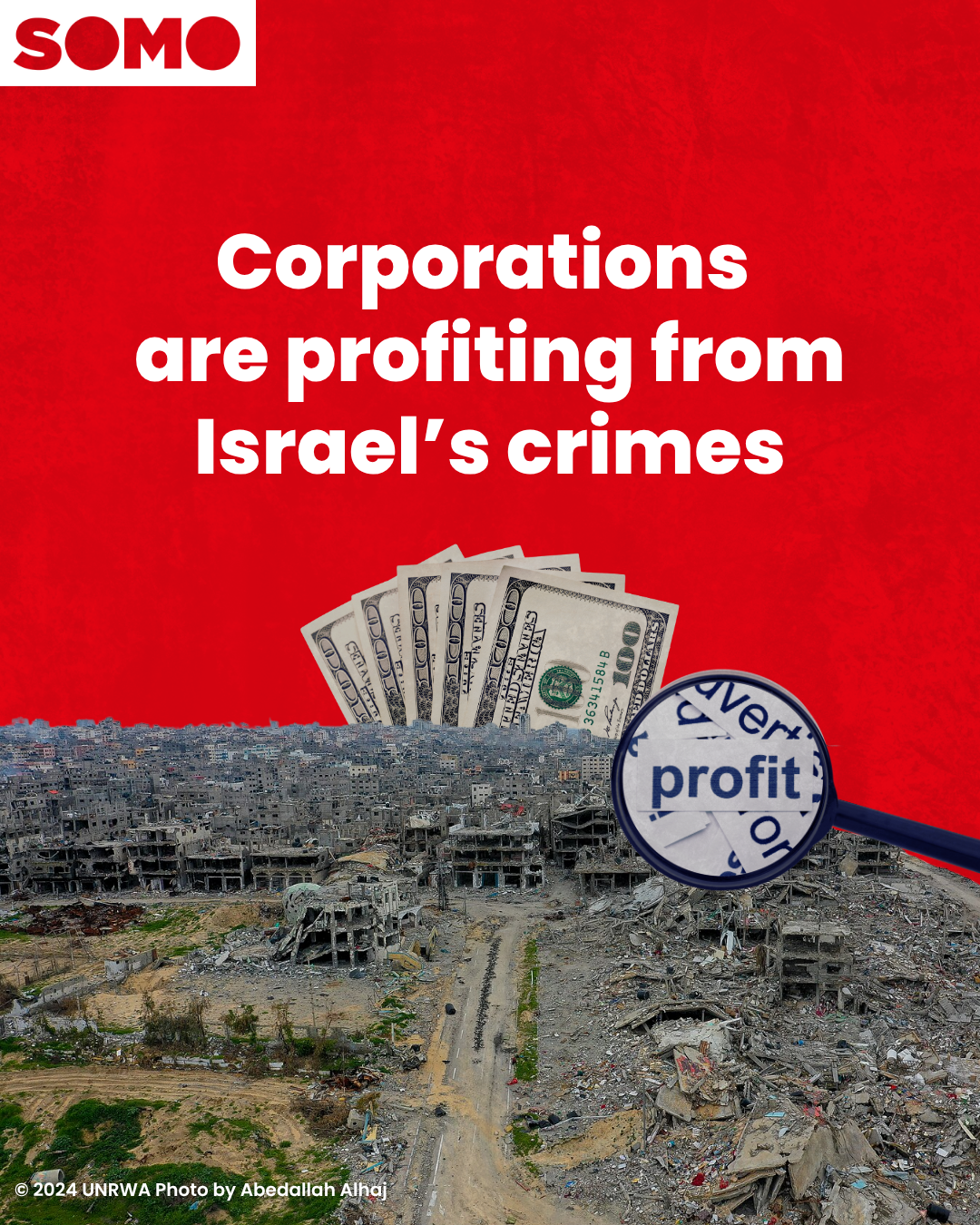
Since the assaults on Gaza began, the Tel Aviv stock exchange has risen by 179%. Titled "From economy of occupation to economy of genocide," the report identifies corporations across sectors profiting from or contributing to Israel’s crimes in Gaza and the West Bank. These businesses – from weapons manufacturing and tech to finance, construction, and academia – are complicit in structural human rights violations, including apartheid, annexation, and genocide.
In this episode, business and human rights scholar Manpreet Kaur Kalra is joined by Lydia de Leeuw, researcher and strategic litigation lead at SOMO, the Centre for Research on Multinational Corporations. Together, they delve into the report’s findings on how corporations are enabling, sustaining, and profiting from genocide in Gaza. Their conversation explores the broader implications for international law and emphasizes the urgent need for binding, enforceable mechanisms to hold corporations accountable for their role in human rights violations.
During this episode, we examine:
The findings of the UN report and what they reveal about profit-driven complicity in genocide
What legal mechanisms are proposed and available to hold corporations and their executives accountable
The U.S. government’s unprecedented response and what it signals
How this moment fits into the broader conversation of corporate accountability for human rights abuses abroad
Resources & References
UN Report: From Economy of Occupation to Economy of Genocide
Economic Sanctions Now: the EU is Israel’s largest investor by SOMO
Business as usual in Palestine? by SOMO
The complicity of corporations in international crimes is not accidental, it's structural. The economies of occupation and genocide are deeply intertwined. This episode exposes an entire economy and profit-making industry built on dispossession, surveillance, and militarized control, enabled by some of the most powerful companies in the world. Without enforceable accountability, corporate actors will continue to profit from the destruction of Palestinian life. The call is urgent—complicity must end and those responsible must be held to account.
Meet Our Guest
Lydia de Leeuw is a criminologist specialised in international criminal law, and works at SOMO, the Centre for Research on Multinational Corporations. She leads SOMO's research and litigation efforts targeting corporations that are complicit in Israel's international law violations against the Palestinians. She joined the Amsterdam based organisation in 2015, after working with Palestinian human rights organisations in Gaza and Nablus.
SOMO, the Centre for Research on Multinational Corporations, investigates the impacts and enablers of unjustified corporate power. Independent, factual, and critical, SOMO has a clear goal – a fair and sustainable world in which public interests outweigh corporate interests. Headquartered in Amsterdam, they work with hundreds of organisations worldwide, acting as a knowledge, research and communications hub.
“Palestine is now the epicenter of the cycle of colonial profiteering and impunity. We must break that cycle once and for all. It is everyone's responsibility to cut our ties to the Gaza genocide and the illegal occupation. States are the primary duty bearers, but we as individuals and collectives also hold power through our actions as consumers, voters, protestors, social media users and in all our other capacities. There's no time or space for hopelessness; we must continue to rise and act.”
- Lydia de Leeuw, Researcher and Strategic Litigation Lead at SOMO
Colonialism, Capitalism, Occupation and Genocide
Colonial violence and genocide have long been intertwined with corporate interests. From the historical dispossession of Indigenous lands to present-day conflicts, commercial enterprises have played a central role in enabling and profiting from systems of domination—a dynamic described as “colonial racial capitalism.” The same logic underpins Israel’s settler-colonial expansion into Palestinian territories, where displacement and replacement aim to erase Palestinian presence and deny their right to self-determination.
“Corporations and their home States – primarily global-minority States – continue to exploit structural inequalities rooted in colonial dispossession. Meanwhile, weaker regulatory systems in formerly colonized States, and development and investment imperatives, mean corporations often evade accountability.”
This is not just a legacy of the past, it’s an unfolding reality. Rather than disengaging, many corporations have deepened their involvement post-October 2023, actively contributing to the military campaign that has devastated Gaza and escalated forced displacement in the West Bank to levels not seen since 1967.
“The law governing corporate responsibility has deep roots in the historic relationship between violent dispossession and private power, and the legacy of corporate collusion with settler-colonialism and racial segregation…Today, some corporate conglomerates exceed the gross domestic product (GDP) of entire sovereign States. Sometimes wielding more power – political, economic and discursive – than States themselves, corporations enjoy increasing recognition as rights holders, with still insufficient corresponding obligations.”
Holding Corporate Executives Accountable
At the Nuremberg Tribunals following World War II, corporate executives were prosecuted and convicted for their roles in enabling Nazi atrocities. One notable case was the IG Farben Trial, where top executives were held accountable for supplying the chemical gas used in concentration camps and for exploiting forced labor. These trials established a critical precedent: that business leaders could be held individually responsible for crimes against humanity, genocide, and war crimes, not just political or military officials.
“The companies that you find in the report…they’re just the tip of the iceberg. The problem is with the system.”
– Lydia de Leeuw, Researcher and Strategic Litigation Lead at SOMO
UN Guiding Principles on Business & Human Rights
The United Nations Guiding Principles on Business and Human Rights (UNGPs) offer an international framework that layout the responsibilities of States and businesses to prevent and address human rights abuses connected to economic activity. They rest on three pillars: the State duty to protect human rights, the corporate responsibility to respect human rights, and the need for access to effective remedies. While States have the primary obligation to prevent, investigate, and remedy abuse by third parties, corporations must also avoid infringing on human rights and address harms they cause, contribute to, or are directly linked with, regardless of State compliance. In conflict-affected areas, businesses are expected to undertake heightened human rights due diligence.
“Had proper human rights due diligence been undertaken, corporate entities would have long ago disengaged from Israeli occupation.”
The EU is Israel's Largest Investor
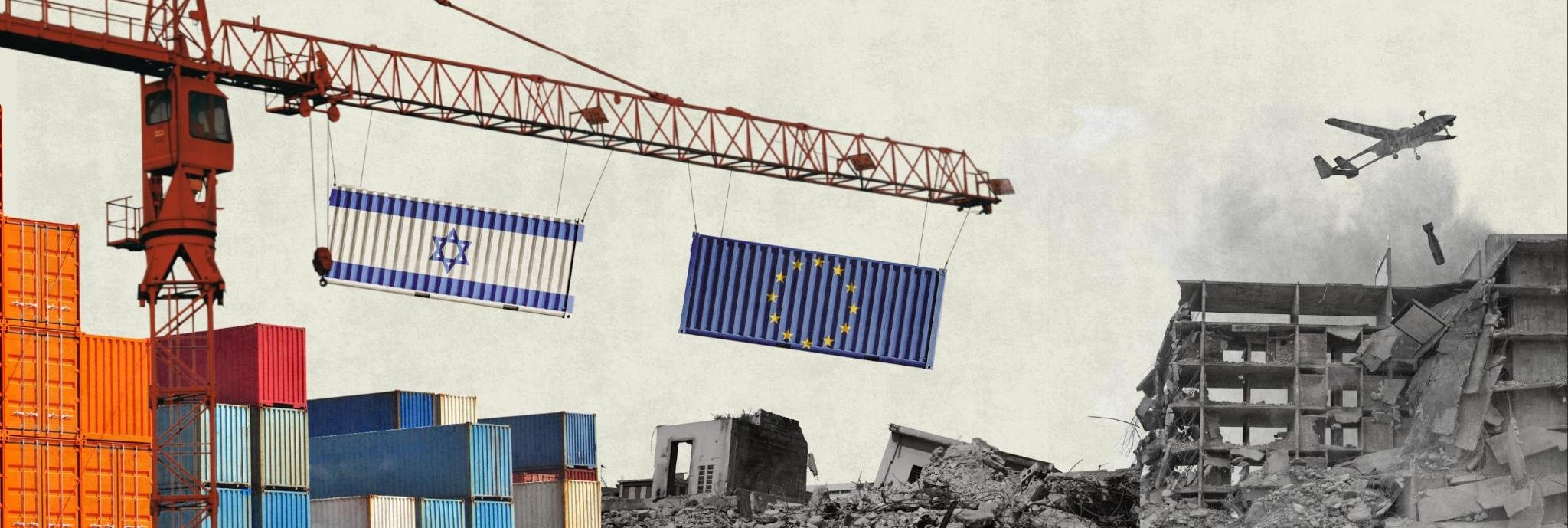
SOMO recently released a powerful analysis of trade and foreign investment flows that lays bare just how deeply intertwined the European Union (EU) and Israeli economies really are. According to their analysis, the EU is not only Israel’s largest trading partner, it’s also its biggest source of foreign investment. In fact, the EU is the largest investor in Israel worldwide, nearly twice as big as the United States, with the Netherlands as the top EU member state investing in Israel.
“What Gaza has made so painfully clear is that the system was always vulnerable to a repetition of history. The slogan ‘never again’ is really just a slogan—unless there’s political will to implement it.”
– Lydia de Leeuw, Researcher and Strategic Litigation Lead at SOMO
On September 3rd the Court of Appeal in The Hague will hear a landmark case brought by ten Palestinian and Dutch civil society organizations, including SOMO, against the Dutch government. The case challenges the Netherlands’ failure to meet its international legal obligations to prevent genocide and end support for Israel’s illegal occupation of Palestinian territory. The coalition is pushing for concrete action – including halting arms exports and corporate involvement in illegal settlements. This appeal follows a 2024 lower court ruling that acknowledged the state’s legal obligations under international law, including the duty to prevent genocide and protect human rights but rejected calls for urgent measures.
Support the Podcast
Art of Citizenry is 100% listener-supported. Every contribution helps us continue producing research-intensive episodes and paying our small but mighty team. If this episode resonates with you, consider supporting our work:
💸 One-time contribution: Paypal
💌 Monthly support: Patreon
✍️ Subscribe to us on Substack & upgrade your account to paid
Thank You for Listening
Please subscribe and leave a five-star review for Art of Citizenry wherever you listen to podcasts. Also, follow along and share your thoughts on Substack - artofcitizenry.substack.com.