
Episode 42: ICE Out — Minnesota Under Siege with Senator Erin Maye Quade
In this episode of Art of Citizenry Podcast, Manpreet Kaur Kalra speaks with Minnesota State Senator Erin Maye Quade from the epicenter of ICE’s siege. Across Minnesota, intensified immigration operations have made daily life unsafe and unpredictable, destabilizing families and threatening people’s basic autonomy and human rights. From masked agents going door to door and idling near schools to racially profiling and arbitrarily kidnapping children and adults, the federal government has carried out an occupation marked by unlawful tactics designed to intimidate and detain.
“You have a lawless, masked, armed paramilitary running rampant through the streets just kidnapping people." – Minnesota State Senator Erin Maye Quade
Together, they move beyond the headlines to unpack the lived reality on the ground. Senator Maye Quade explains why documentation and constitutional observing have become critical tools of protection, how mutual aid networks are sustaining families, and what meaningful accountability could require in the months and years ahead.
In this episode, we explore:
What Operation Metro Surge looks like on the ground and how ICE is using racial profiling to terrorize communities.
The importance of constitutional observing and documentation as tools for accountability
Community resilience in the face of state violence and how mutual aid networks are sustaining families through rent support, food distribution, childcare, and emergency response as families shelter in place.
The possibilities of state-level action amid federal overreach.
What other states and communities should prepare for if this playbook spreads.
“There's 3,000 federal agents in Minnesota. That is more than the number of police officers from the 10 largest police departments combined in the state of Minnesota.”
– Senator Erin Maye Quade
Trigger Warning: This episode was recorded on February 3rd and includes descriptions of state violence. Please take care while listening.
📌 Art of Citizenry is proudly independent. Support us as we critically explore, challenge, and unravel mainstream narratives by empowering listeners with accessible, nuanced perspectives.
Make a one-time contribution via Paypal: visit.artofcitizenry.com/paypal
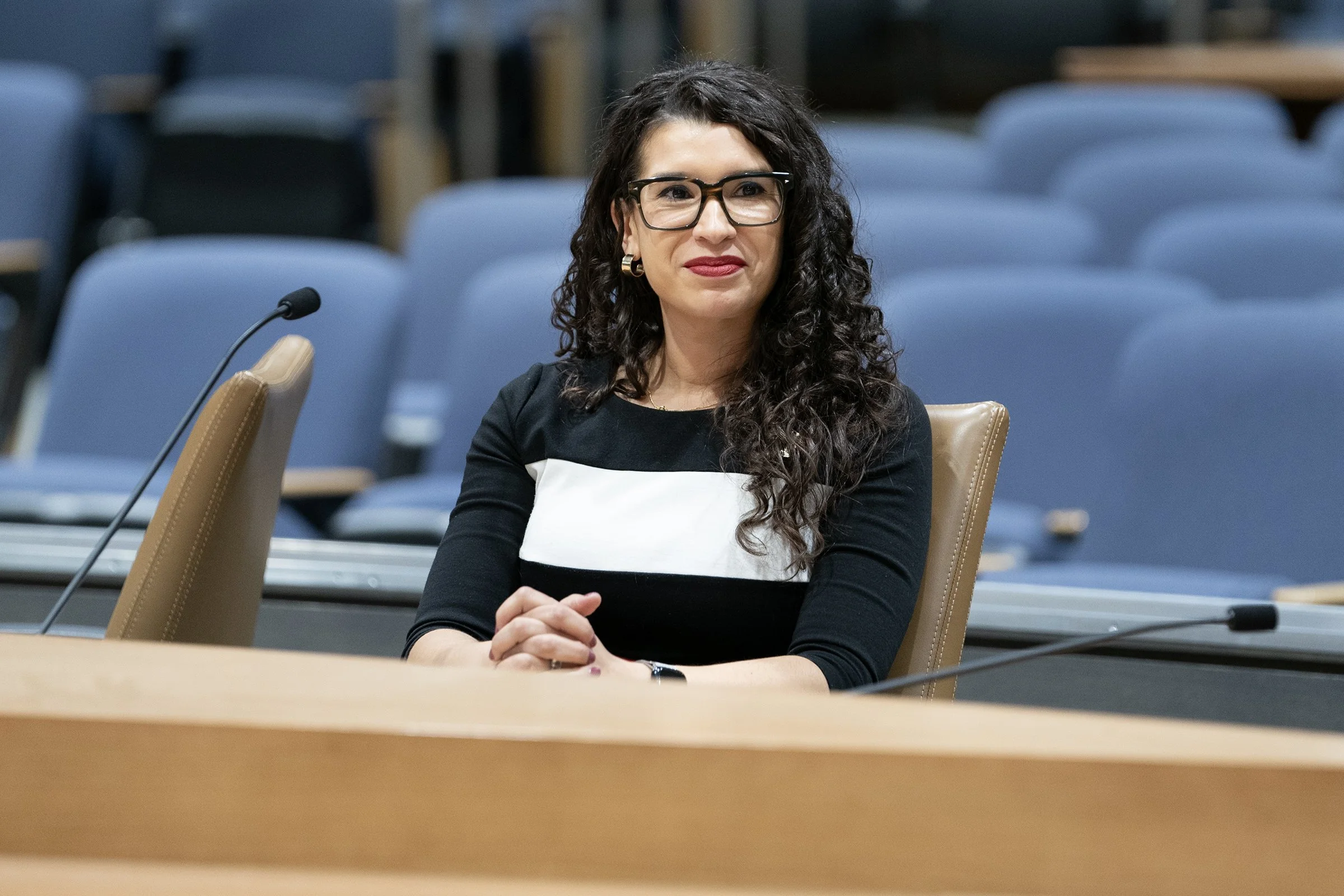
Photo Credit: Minnesota Senate Photography
Meet Our Guest
Senator Erin Maye Quade made history in 2022 as the first out lesbian, the first Black mom, and one of the first Black women elected to the Minnesota Senate. She serves as Vice Chair of both the Education Policy and State and Local Government Committees, and she is a member of the Human Services and Education Finance Committees. Senator Maye Quade has successfully led initiatives to expand reproductive freedom, protect LGBTQ+ rights, safeguard election integrity, and promote literacy, among other key priorities.
What is Constitutional Observing?
Constitutional observing is a community-based practice where trained volunteers calmly witness and document law enforcement activity, including interactions involving immigration authorities, to help ensure constitutional rights are respected and to preserve an accurate record for accountability. Constitutional Observers prioritize accuracy, neutrality, and safety. They do not intervene, obstruct, or escalate situations. Their role is to observe, document, and report.
It is both a constitutionally protected right and a legal right for us to observe and record what armed agents of the state are doing. – Senator Maye Quade
Zooming out, constitutional observers function similarly to legal observers, who document what happens in real time creating records that can later be used in defense cases, public reporting, and litigation to hold law enforcement agencies accountable. Legal observing has its roots in the Black Power Movement, beginning with the Black Panther Party’s 1966 armed community patrols to monitor police conduct, an approach that later became known as “Copwatch”.
Detained and Disappeared
People detained by ICE are routinely transferred to detention centers hundreds of miles away from their homes and families. Detention facilities in the South hold the largest capacity in ICE’s system. The Star Tribune reported that in 2025, more than 2,700 immigrants passed through Minnesota detention facilities. They were transferred nearly 8,000 times. And detainee flights out of the Minneapolis-St Paul International Airport have grown from approximately one flight a week last year to three per day this year.
“We are under describing how horrible it is because one it's almost impossible to describe it. And two, it almost sounds unbelievable when you actually describe the full scope.” – Senator Erin Maye Quade
These transfers often happen with little warning, minimal explanation, and no opportunity for families or attorneys to intervene before a person is moved out of state – treating human beings as inventory to be shuffled within a system designed for profit. Detention far from home isolates people from their families, cuts them off from community support, and makes it exponentially harder to secure legal representation. This geographic separation is not incidental, it is a feature of the system. By isolating detained individuals, ICE discourages public scrutiny and reduces the likelihood of organized resistance or legal accountability.
Pay Attention. Stay Informed. Take Action.
Want to show up in a meaningful way? Visit StandWithMinnesota.com to contribute to mutual aid efforts and connect with trusted support resources.
Know your rights and build communication networks with neighbors. Preparation and community are powerful forms of defense. Download red cards in your preferred language: ilrc.org/redcards
Recording in public is allowed under the First Amendment. It is legal to record immigration officials. Learn more here
Local reporting to follow
Get Prepared
Get to know your neighbors now. Build trust before a crisis.
Seek out and complete a constitutional observer training.
Create a secure group chat (e.g., Signal) for rapid communication.
Establish protection networks around schools and shared community spaces.
Purchase whistles for alert signaling.
Carry “Know Your Rights” cards on you and in your car at all times.
Keep a portable battery pack on you and a charger in your vehicle.
Maintain a full tank of gas for mobility and flexibility.
Identify your role based on your capacity and risk level (e.g., supplies, childcare support, documentation, driving).
Stock up on essential items (e.g., diapers, food) to support mutual aid efforts.
Assess your personal risk and prepare in ways that are sustainable for you.
Act early – these operations can escalate quickly with little warning.
Support the Podcast
Art of Citizenry is 100% listener-supported. Every contribution helps us continue producing research-intensive episodes and paying our small but mighty team. If this episode resonates with you, consider supporting our work:
Thank You for Listening
Please subscribe and leave a five-star review for Art of Citizenry wherever you listen to podcasts. Also, follow along and share your thoughts on Substack - artofcitizenry.substack.com