
Episode 52: Influencer Recession and the Attention Economy
The creator economy promised an alternative to the traditional 9-to-5 that offered fame, autonomy, and money (lots of it). But the usual barriers to success never really disappeared, they simply changed. Now, content creators depend on algorithms and advertisers that determine who gets seen, who gets paid, and increasingly, how much of yourself you have to give away to stay relevant.
Manpreet sits down with New York Magazine features writer Rebecca Jennings to unpack what she calls the “influencer recession” and the increasingly complicated economics of making a living online. We talk about the power of social media algorithms, AI and manufactured virality, shifting ideals of desirability, rage bait content, and the growing pressure for creators to turn more and more of their lives (and themselves!) into content.
In this episode of Art of Citizenry Podcast, we discuss:
The “influencer recession,” particularly why so many influencers are struggling even as influencer marketing continues to grow as a brand strategy
Who holds power in the creator economy (spoiler: it’s not just the platforms!)
The commodification of the self and what we give up when our bodies, relationships, identities, and private lives become content in exchange for attention.
AI generated content and how it is intensifying competition despite being sloppy and problematic
Manufactured virality and clipping (the marketing campaigns behind moments that have felt organically viral).
What is up with all the rage bait content these days.
Shifting standards of beauty, femininity, and desirability, from GLP-1s and declining opportunities for plus-size creators to tradwives, Love Island, and the Bop House. These stories reveal so much more about society and how political ideas (particularly conservative ideology) can spread through lifestyle content without presenting as explicitly “political” (aka everything is political!)
At the center of everything is arguably the world’s most scarce commodity: our attention.
“Where are your lines? What are you willing to put up with to get attention in an era where attention is just such a precious resource and it’s so competitive?” — Rebecca Jennings
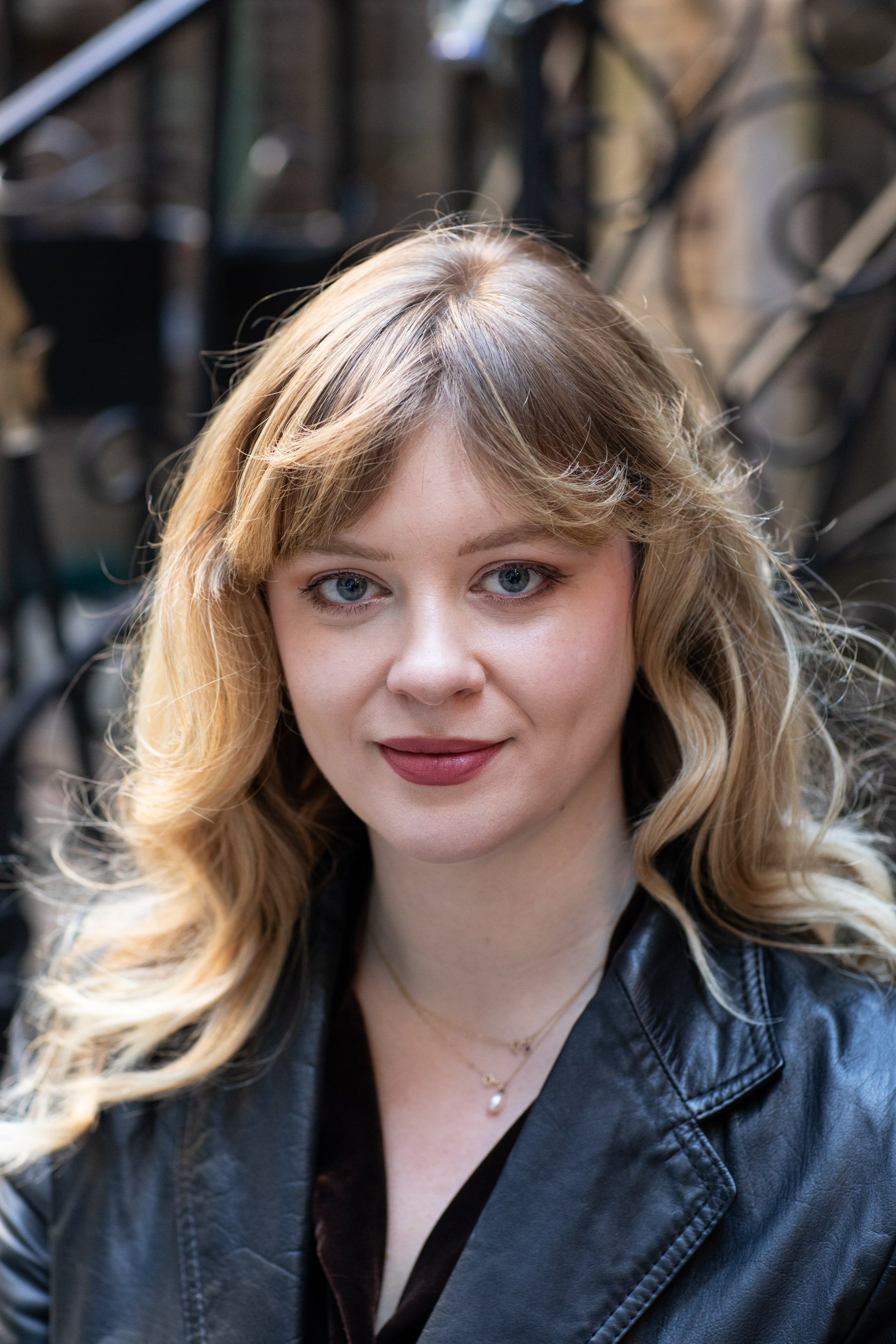
Meet the Guest
Rebecca Jennings is a features writer at New York Magazine covering internet culture. Previously she worked at Vox, where she covered social platforms and the creator economy with a focus on how social media is changing the nature of fame, fashion, money, and human relationships. Her work has explored everything from the joy of reality television to the rise of TikTok and why it feels like suddenly everyone’s an influencer now. She is the author of Be the Bombshell: What Love Island Teaches Us About Dating.
I hope this episode…”helps people think more critically about the slop they consume on their feeds, the people who produce it, who benefits, and who doesn't!” — Rebecca Jennings
What is the “influencer recession”?
Here is the contradiction: an influencer recession does not mean influencer marketing is disappearing, rather it’s quite the opposite! Money is still entering the creator economy (after all, it is a significant marketing tool for brands and corporations alike). Brands still want access to online audiences and frankly, that’s really where most people are now spending their time: from online shopping between meetings to doom scrolling instead of picking up that book gathering dust. More people than ever have grown up watching influencers turn their lives, personalities, expertise, and interests into careers. And these days, everyone appears to be an expert courtesy of AI.
The problem is rooted in the most fundamental of economics concepts: the supply of content is endless with so many people trying to make content. Rebecca describes the current moment as something of a correction after years of creator-economy expansion. The supply of content feels almost limitless, while the thing everyone is competing for, our attention, is not (in fact, social media has made our ability to pay attention so much worse). .
That fundamentally changes the balance of power. There was once this idea that someone with millions of followers had access to millions of people. But having an audience and actually reaching that audience are two very different things when creators do not control the infrastructure distributing their work. And to top it all off, brands have so many options — if one content creator doesn’t work out, there is always another one available to fill the gap. Rebecca explores this changing landscape through influencer Audrey Peters in her Vulture piece, Influencer Recession.
As a personal example, after I published a Substack last year about my episode on REI union busting, my Substack page was disabled for a bit without explanation and my mailing list of almost 3k subscribers was wiped clean. As much as I wanted to fight it, there was nothing I could really do about it because I had no power in that situation.
So, this conversation with Rebecca made me really reflect on a question I think needs to be examined more critically: If your livelihood depends on infrastructure you do not own, rules that are as arbitrary as they are foggy, and an algorithm you cannot see, how independent are you really? And more importantly, how vulnerable is your livelihood?
Did the creator economy actually eliminate the gatekeepers?
I know I can be cynical at times, but I want to be clear that my critique of the creator economy is by no means meant to undercut the ways in which it has been able to meaningfully democratize access. People historically excluded from traditional media institutions were able to find audiences without asking those institutions for permission.
When I started Kaurista, an online lifestyle magazine for Punjabi women back in 2010, I was able to reach and engage a global readership thanks to social media platforms. Creators have built communities around interests that editors or television executives might never have considered commercially viable and this has allowed a larger diversity of voices to be centered in the content audiences consume.
Independent journalists, educators, artists, crafters, activists, and countless others have been able to speak directly to people they wouldn’t necessarily reach otherwise. Yes, all of this matters, BUT democratizing the ability to publish is not necessarily the same thing as democratizing power. The creator economy did not eliminate gatekeepers so much as introduce new ones. Platforms determine distribution, algorithms determine visibility, and brands determine commercial viability. As social media platforms focus more and more on profit (pay to play), the less democratized these platforms become…obviously.
Rage bait and the economics of being impossible to ignore
What is up with all the rage bait?! If attention is scarce, being merely interesting is frankly no longer enough. You have to become impossible to ignore…enter rage bait.
Rebecca and I talk about creators who have learned to build content specifically around the likelihood that people will become enraged, offended, or disgusted enough to engage. After all, from the algorithm’s perspective, outrage can look remarkably similar to enthusiasm. A hate-watch is still a view, an angry comment is still a comment, and a “wtf” share is still a share.
And of course, the algorithm rewarding content that makes us rage does not absolve creators of responsibility for what they produce. BUT it does mean we cannot seriously analyze rage bait without talking about the companies that designed an economic system where outrage can be monetized. We dive deeper into this in the episode – be sure to listen!
“Your attention right now is like one of your most valuable resources. And you have the permission to ignore everything that you don’t have to pay attention to or that you don’t want to pay attention to.” — Rebecca Jennings
The Politics of (Conservative) Lifestyle Content
Rebecca is the author of Be the Bombshell: What Love Island Teaches Us About Dating, and we talk about what reality television can tell us about changing ideas of femininity, masculinity, dating, and desirability.
In our conversation, Rebecca points to increasingly traditional language around gender appearing in dating culture: wanting a man who “leads,” entering your “soft girl era,” and other ideas that can sound like innocuous lifestyle preferences but carry much older assumptions about what men and women are supposed to be.
The political power of these aesthetics is precisely that they do not necessarily arrive looking political. They arrive as lifestyle content: dating advice, beauty routines, homemaking videos, motherhood content, a sourdough starter, a beautifully lit kitchen, or a woman telling you how nice it feels to be taken care of.
As a relatively new mom/mother/mata ji, I find this especially complicated. I have caught myself censoring how much of motherhood I share because I don’t want that part of my life to flatten everything else about me or have my choices conflated with a cultural and political ideal I do not share. And that itself is troubling – the fact that a narrative can become culturally pervasive enough that we begin monitoring/censoring ourselves through it, it has power.
“Focus on your life that exists offline. Because all the bullshit will change and evolve, and what matters is probably not on a screen.” — Rebecca Jennings
Writings Referenced in this Episode
Vulture: The Influencer Recession
Vulture: The Feed Is Fake
R.S. Benedict’s Everyone Is Beautiful and No One Is Horny
Support the Podcast
Art of Citizenry is 100% listener-supported. Every contribution helps us continue producing research-intensive episodes and paying our small but mighty team. If this episode resonates with you, consider supporting our work:
Thank You for Listening
Please subscribe and leave a five-star review for Art of Citizenry wherever you listen to podcasts. Also, follow along and share your thoughts on Substack - artofcitizenry.substack.com.