
Episode 25: Not So Lucky Jeans — Unauthorized Subcontracting & Wage Theft in Fashion Supply Chains
April 24th marks the anniversary of the Rana Plaza factory collapse in Bangladesh—a tragedy that killed over 1,100 garment workers and injured thousands more. It exposed the human cost of unsustainable fashion cycles and sparked global conversations about corporate accountability, worker safety, and supply chain transparency. Over a decade later, workers across global supply chains still continue to fight for basic rights.
In this episode, Manpreet Kaur Kalra speaks with Anna Canning, Worker Rights Senior Program Director at Partners for Dignity and Rights. Anna recently published an article exposing Lucky Brand’s role in severance theft at Industrial Hana, a now-shuttered Guatemalan garment factory. The factory supplied apparel to companies including Lucky Brand, Puma, and American Eagle, yet only two of those brands have contributed to the $1.5 million in severance owed to workers. Lucky Brand continues to stall.

Image Courtesy of Partners for Dignity and Rights
From unauthorized subcontracting to complex corporate structures, we take listeners behind the seams of global apparel production while unpacking the importance of legally binding agreements to protect garment workers in supply chains. We examine how systemic wage theft and labor abuses become “no one’s responsibility,” and what real accountability—rooted in worker-led models—could look like.
“The goal is to build a world where corporate impunity is out and worker-driven corporate accountability is the norm.” - Anna Canning, Partners for Dignity and Rights
What happens when severance isn’t paid? And how can we pressure companies—like Lucky Brand—to pony up? Tune in for a conversation that unpacks the true cost of complex fashion supply chains.
📌 Art of Citizenry is proudly independent. Support us as we critically explore, challenge, and unravel mainstream narratives by empowering listeners with accessible, nuanced perspectives.
Make a one-time contribution via Paypal: visit.artofcitizenry.com/paypal
About the Case
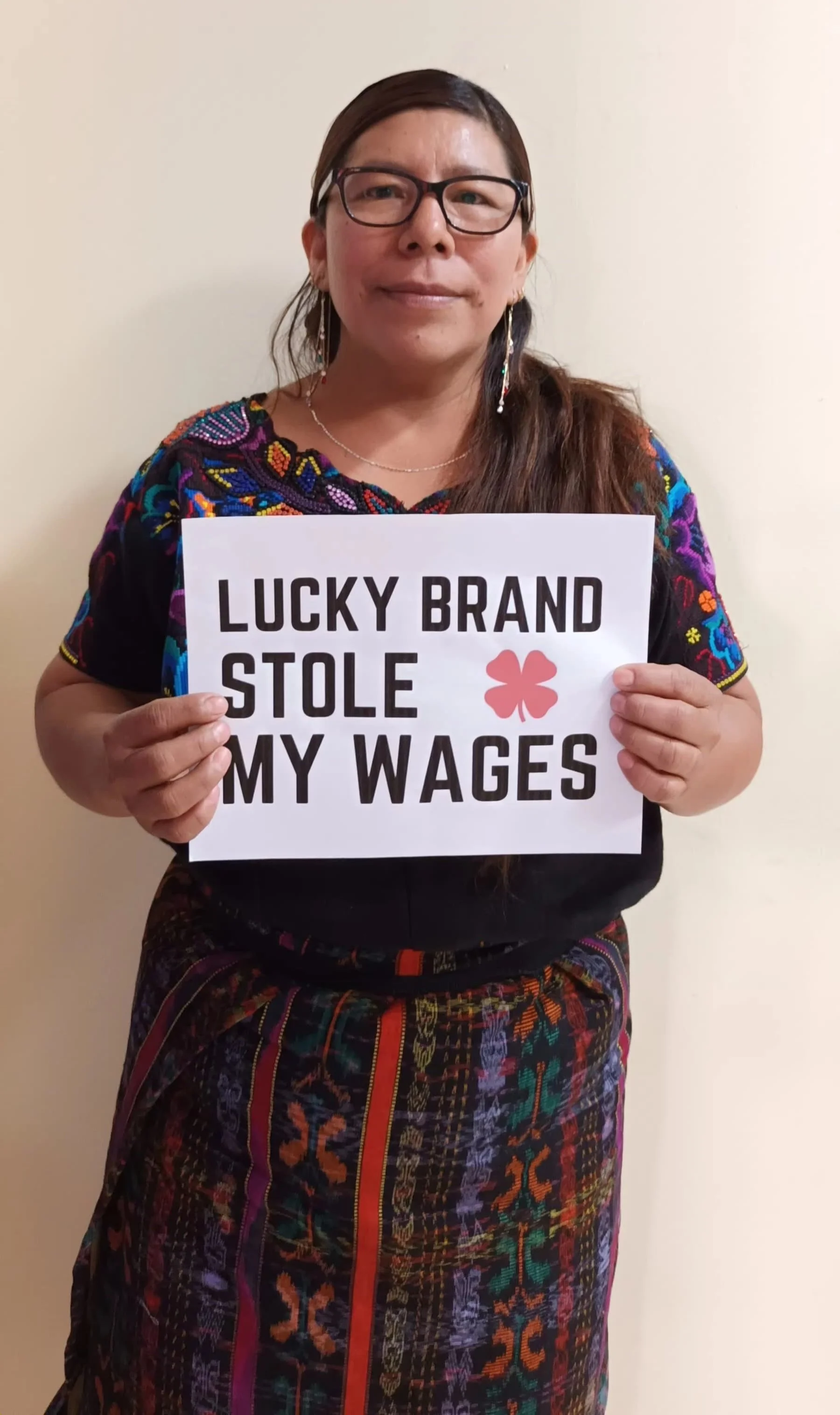
Credit: Partners for Dignity and Rights
In October 2023, Industrial Hana, a garment factory in Guatemala, closed suddenly, leaving approximately 250 garment workers without jobs—and without the $1.5 million in severance they were legally owed under Guatemalan labor law. The factory had been subcontracted to produce clothing for major brands, including Lucky Brand, Puma, and American Eagle (among others).
“Both American Eagle and Puma responded to initial outreach by noting that Industrial Hana was not one of their known suppliers.” However, the Worker Rights Consortium (WRC) was able to trace Industrial Hana to the brands’ known suppliers through photos of tags and production sheets — “evidence that production had been further contracted out.”
This is a story about unauthorized subcontracting – a common but largely invisible practice that leaves workers without protections and brands without accountability. This isn’t just about one factory.
“Unauthorized subcontracting of the apparel manufacturing process to other production sites is well-documented as a significant human rights risk as it is often a way to cut costs, meet rushed production deadlines with excess overtime, or otherwise accommodate a brand’s purchasing practices.” - Anna Canning, “Not So Lucky”
Puma and American Eagle have since paid their share of the owed severance. Almost a year and a half later, workers are still waiting on payment from Lucky Brand, which is owned by a convoluted chain of private equity investors.
The abuses we see in workplaces in the US and around the globe are driven by corporate practices. - Anna Canning
As Anna discusses in her article Not So Lucky: How Lucky Brand, Shein, and Private Equity Fleeced Guatemalan Garment Workers, this case is emblematic of a global pattern of corporate impunity – evasion, exploitation, and the urgent need for systemic reform.
Meet Our Guest
Anna Canning leads the Worker Rights team at Partners for Dignity and Rights. Prior to that, she was with the Worker-driven Social Responsibility Network. Throughout her career, Anna has led creative campaigns taking on corporate power and the fairwashing used to cover corporate abuses. Anna has over 20 years of experience working in supply chains and in movements for food justice and human rights.
📌 Partners for Dignity and Rights is a non-profit that advocates for human rights, especially the rights to dignified work, housing, and public education.
A Note from Our Guest —
A key takeaway from this conversation is that no matter how long or convoluted the supply chain, brands have a responsibility to step up and address the consequences of their purchasing practices. In this case, Lucky Brand and their owner Authentic Brands Group need to ensure that the workers who sewed their clothes at the Industrial Hana factory in Guatemala are paid the remaining $500,000 they are owed.
“Workers should be the ones that define what rights-respecting is in their workplaces.” — Anna Canning, Partners for Dignity and Rights
Resources & References
Read Anna’s Article: Not So Lucky: How Lucky Brand, Shein, and Private Equity Fleeced Guatemalan Garment Workers
Support the Podcast
Art of Citizenry is proudly independent. This allows us to speak with raw honesty about the ways people, brands, and organizations perpetuate colonial legacies. Here, we embrace the power of nuance and unfiltered truth, believing that meaningful growth emerges when we face complexity head-on. Support us as we critically explore, challenge, and unravel mainstream narratives by empowering listeners with accessible, nuanced perspectives. Your support directly sustains our podcast, helping cover the wages of our dedicated three-person team.
Subscribe to us on Substack & upgrade your account to paid
Make a one-time contribution via Paypal: visit.artofcitizenry.com/paypal
Become a monthly contributor via Patreon: patreon.com/manpreetkalra
Thank You for Listening
Please subscribe and leave a five star review for Art of Citizenry wherever you listen to podcasts. Also, follow along and share your thoughts on Substack - artofcitizenry.substack.com