
Episode 49: Misinformation and Collective Sensemaking with Kate Starbird
What happens when the way we make sense of the world is mediated by platforms designed to reward speed, outrage, and attention?
In this episode of Art of Citizenry, host Manpreet Kaur Kalra speaks with Dr. Kate Starbird, professor at the University of Washington and co-founder of the UW Center for an Informed Public. They discuss rumors, misinformation, disinformation, conspiracy theories, AI-generated content, and the fragile state of trust in our communication ecosystem.
Every day, we’re confronted with an overwhelming volume of information. Breaking news alerts, viral videos, social media posts shared by friends, influencers, politicians, and strangers. We scroll through competing claims about everything ranging from elections to natural disasters, and increasingly, content generated by artificial intelligence.
But misinformation is not only a problem of falsehoods. It is also a problem of uncertainty. Rumors spread because it is human nature to try to make sense when things are not clear. And social media platforms have transformed that deeply human process into something more dangerous, more fragmented, and easier to manipulate.
Together, we explore:
What misinformation, disinformation, conspiracy theories, and rumors mean.
How misinformation spreads and why rumors are a deeply human response to uncertainty.
How disinformation campaigns blur the lines between intent, belief, and amplification.
How influencers have become the modern-day interpreters of reality.
The ways in which social media platforms, influencers, and algorithms have changed the speed, structure, and power of public understanding.
What AI-generated content, election rumors, and declining trust mean for democracy.
What it means to participate responsibly in an information ecosystem where trust itself is increasingly contested.
This conversation asks us to consider the bigger question: can a society govern itself if people no longer believe they can know what is happening? And if we want to hold social platforms accountable for the worlds they help create, we also have to ask who has the power to enforce that accountability, and whose definition or truth is protected when they do.
Meet Our Guest
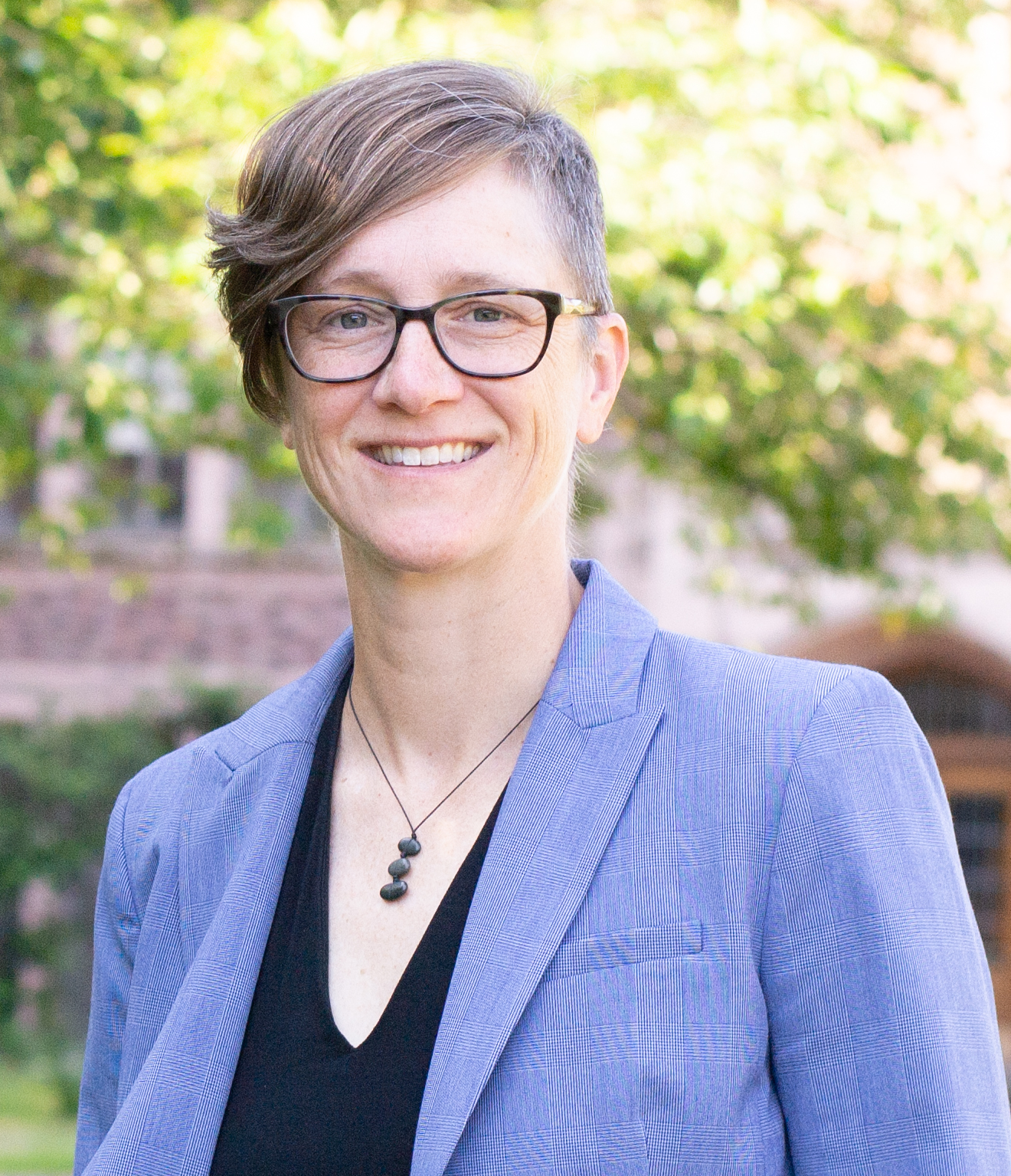
Dr. Kate Starbird is a Professor in the Department of Human Centered Design & Engineering (HCDE) at the University of Washington and co-founder of the UW Center for an Informed Public. Her research sits within the fields of human-computer interaction and crisis informatics — or the study of how social media and other digital technologies are used during crisis events. Currently, she focuses on the spread of online rumors, misinformation, and disinformation during crises, elections, and breaking news events. In particular, she investigates the *participatory* nature of rumors and online disinformation campaigns, exploring both top-down and bottom-up dynamics.
“The logic of these platforms is reconfiguring how information flows, reconfiguring politics, and reconfiguring values, in part because of the ways they amplify certain kinds of content. And that content is not necessarily aligned with making a shared sense of reality that helps us solve actual problems.” — Dr. Kate Starbird
Rumors and How Misinformation Spreads
Here are some key takeaways from this conversation that I hope you hold onto:
Rumors are not always malicious. They are often part of how humans make sense of uncertainty, especially during crises, elections, disasters, and breaking news events.
Disinformation is rarely just a single false post. It often works as a campaign, layering truth, plausibility, exaggeration, and distortion to produce a misleading sense of reality.
Most people who spread disinformation are not intentionally lying. Many are sincere believers who share content because it confirms their worldview, identity, or sense of what is happening.
Platforms are not neutral spaces. Their algorithms, incentives, and attention dynamics shape which rumors travel, which narratives gain power, and which communities become vulnerable to manipulation.
AI raises the stakes. As synthetic images and videos become more convincing, society will need new ways to evaluate trust, authenticity, and evidence.
The answer is not silence. Responsible participation means understanding how these systems work, recognizing our own role within them, and choosing to share information in ways that align with our values.
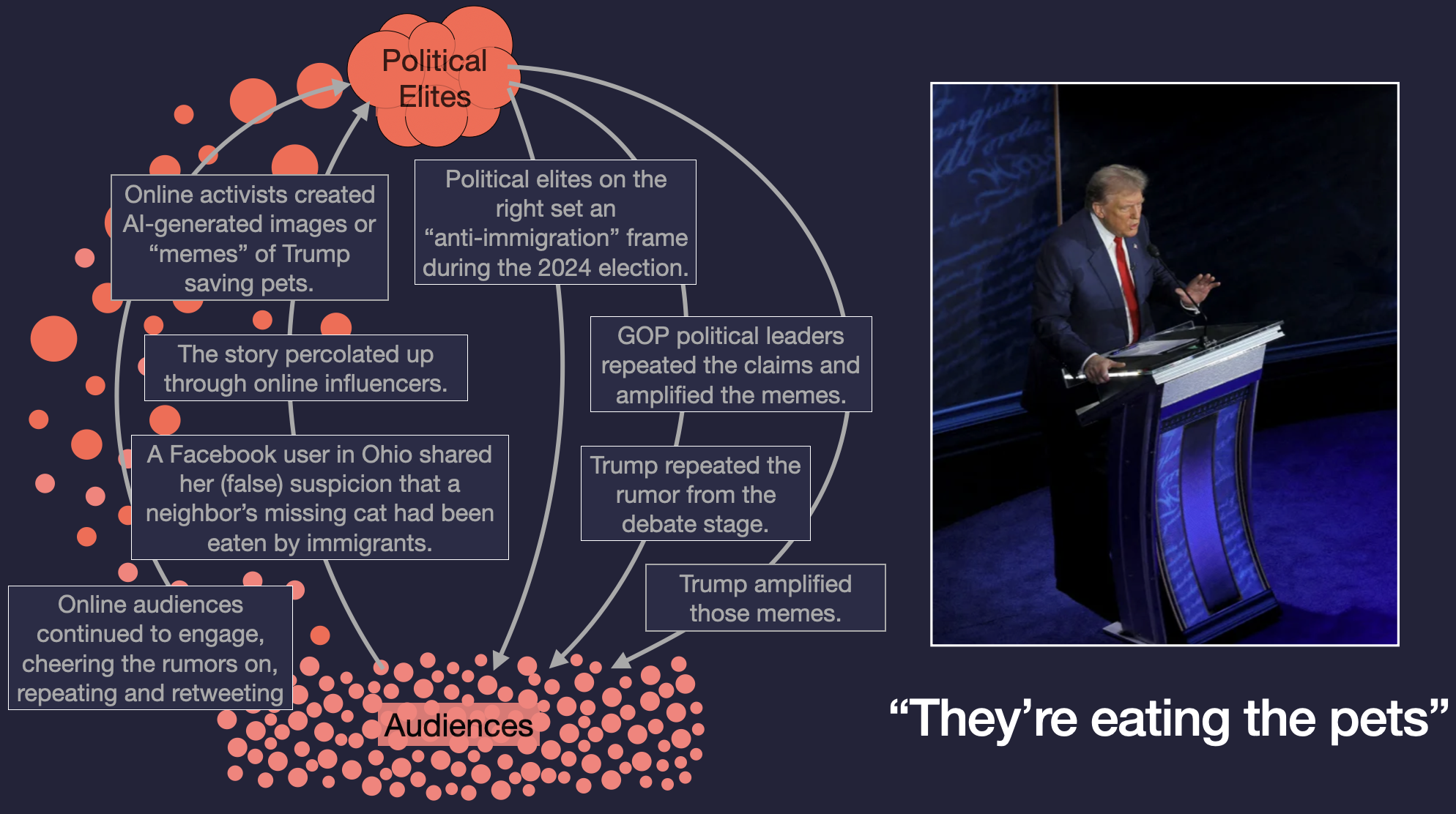
Image courtesy of Dr. Kate Starbird
What is the difference between misinformation and disinformation?
Misinformation generally refers to false or misleading information that may be shared without intent to deceive. Disinformation involves intentional efforts to mislead, often for political, financial, or social gain. In practice, the two can blur because intentional disinformation campaigns are often spread by people who genuinely believe the claims.
“We’ve all been unwitting but willing spreaders of disinformation. It’s part of what it means to be online at this point.” — Dr. Kate Starbird
What is collective sensemaking?
Collective sensemaking is the process by which people come together to interpret uncertain, confusing, or disruptive events. During crises, elections, disasters, and breaking news moments, people look for answers, share information, and build narratives to explain what is happening.
Why do rumors spread during crises?
Rumors spread during crises because people are trying to resolve uncertainty. Early information is often incomplete, raw, or changing, which creates space for speculation. Rumors can serve emotional, social, and informational purposes, even when they later turn out to be false.
How do influencers shape misinformation?
Influencers often act as lead sensemakers for their communities. They do not just amplify information. They frame events, package uncertainty into stories, and help audiences interpret what matters. This can make them powerful drivers of rumor spread, especially in political contexts.
Why are election rumors so persistent?
Election rumors often begin with something real but misunderstood, such as a ballot issue, machine error, administrative mistake, or confusing process. These events become misleading when their impact is exaggerated, remedies are ignored, or mistakes are framed as intentional fraud.
How does AI affect misinformation?
AI makes it easier to generate convincing text, images, audio, and video at scale. This creates new challenges for trust because people may no longer be able to rely on visual evidence in the same way. The result may be greater uncertainty about what is real and who can be trusted.
“You can’t really have a democratic society where people are able to make decisions about self-governance when people don’t think they know what’s going on.” — Dr. Kate Starbird
Thought Exercise on the Content We Engage With Online
This episode asks not only how misinformation spreads, but what kind of information ecosystem democracy requires. Rumors are deeply human. The challenge is that our sensemaking now runs through systems designed to reward speed, outrage, and attention. The work ahead is not to retreat from public life, but to participate more conscientiously in it.
“I want the next generation of media literacy to focus on empowering people to share, build their own communities, and find their voices.” — Dr. Kate Starbird
Trace a Rumor Through Your Feed
After listening to this episode, think about a claim, story, video, or headline you recently saw online that made you immediately feel something: outrage, fear, validation, suspicion, grief, or certainty. Before asking whether it was true or false, pause and ask a different set of questions.
Where did you first see it?
Was it shared by a journalist, a friend, an influencer, a political figure, an anonymous account, or an algorithmically recommended post?
What emotion did it trigger in you?
Did it confirm something you already believed?
Did it make you want to share it before you had time to verify it?
Now trace the story backward. Who seemed to be framing the event? Who was amplifying it? Who benefited from the version of reality being presented? What information was missing, simplified, exaggerated, or treated as suspicious?
Then trace the story forward. What might happen if people believe it? Could it shape how they vote, whom they trust, whether they feel safe, or how they understand a crisis? Could it deepen cynicism, reinforce a conspiracy theory, or make people believe that no reliable information is possible at all?
This exercise is not about shaming yourself for being vulnerable to misinformation. We are all vulnerable. Rumors spread because we are doing the most human thing: trying to make sense of things. We look for patterns, we search for meaning, and we rely on the people and communities around us to help us understand what is happening. That’s so incredibly human!
Support the Podcast
Art of Citizenry is 100% listener-supported. Every contribution helps us continue producing research-intensive episodes and paying our small but mighty team. If this episode resonates with you, consider supporting our work:
Thank You for Listening
Please subscribe and leave a five-star review for Art of Citizenry wherever you listen to podcasts. Also, follow along and share your thoughts on Substack - artofcitizenry.substack.com.