
Episode 48: Patagonia and the Commodification of Nature
Patagonia is a vast region spanning southern Chile and Argentina. It is also the name of a multibillion-dollar outdoors company that has spent more than 50 years turning the region’s landscapes and mythology into a symbol of wilderness and adventure.
Now, Patagonia Inc. is suing drag queen and climate activist Pattie Gonia for trademark infringement and dilution. But beneath all the legal questions lies a more complicated one: How did a U.S. corporation acquire the power to control the commercial meaning of a geographical area in the first place?
This episode is an invitation to think beyond whether Pattie Gonia’s name is too similar to Patagonia’s trademark and to instead delve deeper into who defines the meaning of a place and what happens when that power becomes privately owned.
In this episode of Art of Citizenry Podcast, host Manpreet Kaur Kalra is joined by Professor Alexandra Roberts, a scholar of trademark law at Northeastern University, to unpack the legal questions at the center of the case and the deeper ethical questions hiding beneath them.
Together, they examine the mechanisms that underpin trademark law, the colonial logic of commodification, corporate personhood, and what it would mean if nature were to be granted similar rights.
If corporations can take self-protective actions and advocate for their interests, then why not rivers and forests? – Professor Alexandra Roberts
Tune in as we explore:
What Patagonia must prove in its trademark infringement and dilution claims against Pattie Gonia
Why the “duty to police” argument is often overstated in trademark disputes
How a company can acquire trademark rights in a geographic name and reshape public meaning
The colonial mythology of Patagonia as an empty wilderness and the Indigenous histories obscured by that narrative
What Rights of Nature and corporate personhood reveal about whose interests the law recognizes
Potential reforms to better protect geographic, cultural, and Indigenous terms
Meet Our Guest

Alex Roberts is Professor of Law & Media at Northeastern University School of Law & Northeastern's College of Arts, Media and Design. She teaches courses in intellectual property, trademark law, and entertainment law, and her scholarship focuses on federal trademark and false advertising law, particularly in cyberspace. Professor Roberts is a regular commentator in the media, including appearances on CNN, CBS and Fox and in publications including The Wall Street Journal, The Washington Post, The New York Times, and Rolling Stone.
Trademark law has two main goals: protecting consumers and competition, and incentivizing and rewarding producer investment. It doesn't always do the best job taking into account speech and expression or protecting the interests, identities, or cultural knowledge of minority groups, so considering those perspectives and thinking about how US law could better include them helps equip scholars and community members to advocate for different rules and better outcomes. – Professor Alexandra Roberts
Patagonia vs. Pattie Gonia
In January 2026, outdoor brand, Patagonia Inc. filed a lawsuit against Wyn Wiley, climate activist and drag queen better known by the stage name Pattie Gonia. In September 2025, Pattie applied to register her name, Pattie Gonia, as a federal trademark with the US Patent and Trademark Office (USPTO) across multiple categories, including apparel, merchandise, marketing, community events, and promoting environmental sustainability and equality. Patagonia, Inc is seeking one dollar in damages, plus legal fees (which are sure to be significant). But the real stakes are injunctive. The company wants the court to block allegedly infringing merchandise, this could include merchandise with Pattie Gonia written on it, prevent Pattie from obtaining the federal trademark registration she applied for, and restrict commercial uses of the name that Patagonia says could cause confusion or dilute its brand.
“I don’t think a mark owner of a geographic place name should ever succeed on a dilution claim.” — Professor Alexandra Roberts
At the crux of it, this case calls on us to interrogate how much control a corporation can claim over a name that it itself has borrowed from a real place.
What does this mean practically speaking? In an infringement claim, Patagonia, Inc. must show that consumers are likely to believe Pattie Gonia’s merchandise comes from Patagonia™, was authorized by the company, or reflects a collaboration between them. For dilution, the company must argue that Pattie Gonia’s name weakens the distinctiveness of the Patagonia™ brand, even if consumers are not actually confused.
Did Patagonia have to sue?
Patagonia has framed the lawsuit as part of its responsibility to protect its trademark. Infact, one of the most common claims in trademark disputes is that companies have a legal "duty to police" their trademarks and risk losing them if they fail to sue potential infringers. But as Professor Roberts explains, that argument is often overstated.
While trademark owners do need to prevent their marks from becoming generic terms (think escalator or thermos) and may lose the ability to challenge a specific use if they wait too long to act, there is no general rule requiring companies to sue everyone who uses a similar name.
“When a big corporation says, ‘We don’t want to sue you, but our hands are tied, we have to. Trademark law makes us,’ they will always get side-eye from me…they’re just exaggerating what the law requires of them.” — Professor Alexandra Roberts
In other words, Patagonia had legal options. The company could have chosen not to sue, pursued a coexistence agreement, or negotiated limits around how Pattie Gonia used the name commercially. Trademark law did not automatically compel litigation.
Drag, Parody, and Trademark Law
Pattie Gonia’s name follows a long tradition in drag of transforming familiar brands, celebrities, and cultural references through wordplay.
Parody and expressive uses can receive strong First Amendment protection under trademark law. A parody often works by calling the original mark to mind while also signaling that it is something different – a joke, critique, or transformation rather than a source of confusion. But the legal protection becomes more complicated when parody moves into trademark use (tune into the episode where we discuss a recent Supreme Court case regarding this…and how it all came down to a poop joke).
Back to Pattie Gonia – the parodic nature of the name may still make consumer confusion less likely because consumers may understand the reference without believing the merchandise comes from Patagonia Inc. But parody alone does not end the inquiry. The court still has to ask whether Pattie Gonia’s commercial use of the name is likely to confuse consumers, dilute Patagonia’s mark, or coexist as protected expression.
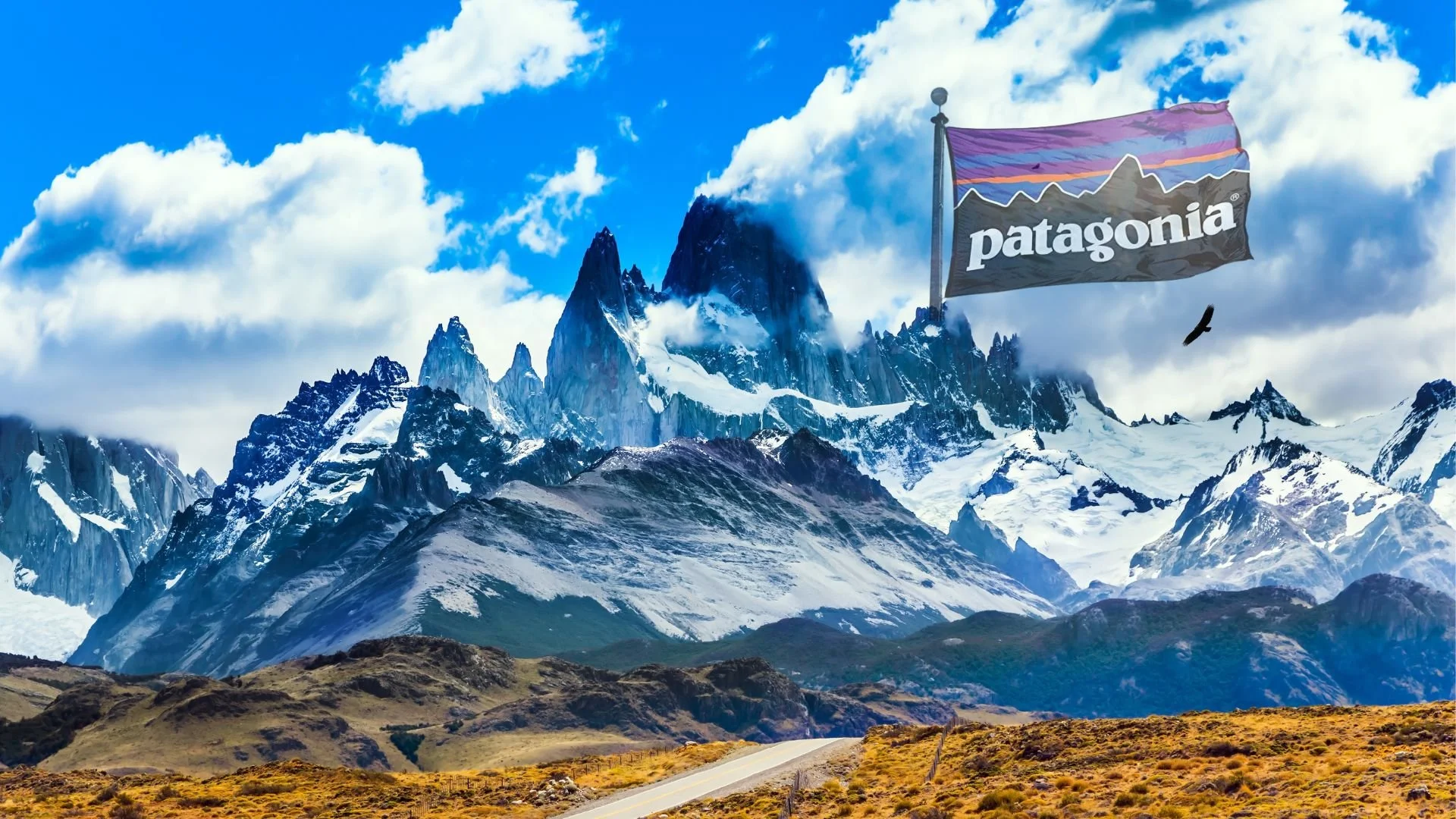
How does a corporation trademark a place name?
Trademark law allows geographic terms to become protected when consumers begin to understand them not simply as descriptions of a location, but as indicators of a particular commercial source. This process is called acquired distinctiveness. After decades of marketing, the name Patagonia now points many consumers toward the outdoor company before it points them toward the region.
Patagonia Inc. does not own the physical region. But trademark law allows it to claim rights in the commercial meaning it has built around the name – the association between “Patagonia” and its goods, reputation, and brand identity.
The commodification of nature: a very short overview of Patagonia’s history
For generations, outsiders have portrayed Patagonia as a vast, remote, and nearly empty wilderness. That image did not emerge innocently.
In the late nineteenth century, the governments of Argentina and Chile depicted Patagonia as a desert – an empty landscape awaiting civilization. A narrative that emerged alongside colonial projects of territorial expansion rather than from an absence of people. This mythology helped justify the conquest of Indigenous lands and the killing, enslavement, and displacement of Indigenous peoples.
Patagonia was never empty. It has long been home to Indigenous communities with deep histories and relationships to the land. Yet the image of untouched wilderness remains commercially valuable. It sells adventure, and the fantasy of escape into a landscape seemingly unburdened by history, politics, or people.
Patagonia did not create those associations from nothing. It drew them from a real landscape and from a colonial history about that landscape, one that often makes Indigenous people disappear while turning the territory into a backdrop for someone else’s exploration.
The lawsuit therefore raises a question larger than whether Pattie Gonia’s merchandise infringes a trademark. It asks who has the power to determine what “Patagonia” means, and what histories are erased when one commercial meaning becomes dominant.
“Through decades of marketing, the company transformed the name of a real place into a commercial brand.” – Manpreet Kaur Kalra
Corporate Personhood and the Rights of Nature Movement
In this episode, we also consider an imbalance embedded in the Western legal system. Corporations are legally recognized as persons – they can own property, enter contracts, protect their interests, sue and be sued. The natural world, meanwhile, is generally treated as property for human use.
The Rights of Nature movement challenges that assumption, recognizing rivers, forests, ecosystems, and other natural entities as rights-bearing subjects with inherent rights to exist, regenerate, and flourish. The idea has gained traction around the world, particularly through Indigenous-led and Global South legal movements. In 2008, Ecuador became the first country to enshrine the Rights of Nature in its national constitution. In 2017, New Zealand granted legal personhood to the Whanganui River. Courts in Colombia have similarly recognized the Amazon rainforest as a subject of rights.
While Rights of Nature is typically discussed within environmental and Indigenous law, this episode explores whether the framework offers a useful lens for thinking about trademark law. If corporations can acquire legal rights in the commercial meaning of a place, what might change if places themselves (or the communities most closely connected to them) were recognized as having interests worthy of protection?
The question is less about whether Patagonia the region could literally own a trademark and more about what our legal system chooses to recognize, protect, and give a voice to. If corporations can speak through the law, why not rivers, forests, or landscapes?
Sure frameworks such as this currently sit largely outside of trademark law. However, they offer another way to think about who should have standing when the name or identity of a place becomes a commercial asset.
The ethical questions we should be asking about trademarking place names
The Patagonia v. Pattie Gonia lawsuit may ultimately be resolved through a negotiated coexistence agreement. We don’t know. Regardless of how the case ends, the dispute reveals something larger than a fight over consumer confusion.
It exposes the irony at the heart of the case: a corporation that built its identity around a borrowed name and all that is associated with it, is now asking the law to protect the commercial meaning it created around that name.
That irony points to a deeper imbalance. Communities whose histories, cultures, and relationships to land give a place its meaning may have little formal say in how that name is commercialized. Corporations, meanwhile, can borrow from those meanings, convert them into brand equity, and gain legal power to restrict how others use them in the marketplace.
The case asks us to think beyond infringement and dilution. Who gets to define what Patagonia means? Whose histories are erased when one version of that meaning becomes commercially dominant? And what responsibilities arise when value is drawn from a place, its people, and its colonial mythology? At the end of the day, legal rights do not resolve the ethical question of what we owe to the places, people, and histories from which value is drawn.
Support the Podcast
Art of Citizenry is 100% listener-supported. Every contribution helps us continue producing research-intensive episodes and paying our small but mighty team. If this episode resonates with you, consider supporting our work:
Thank You for Listening
Please subscribe and leave a five-star review for Art of Citizenry wherever you listen to podcasts. Also, follow along and share your thoughts on Substack - artofcitizenry.substack.com.