
Episode 44: No Contract, No Coffee — Starbucks, Union Busting, and the Fight for Labor Rights
Starbucks built its brand on the idea of the “third place.” But over the past decade, the company has quietly unraveled the very conditions that made that promise possible.
In this episode of Art of Citizenry Podcast, Manpreet Kaur Kalra speaks with Megan Erickson, a Philadelphia-based barista and member of Starbucks Workers United, about the growing labor movement inside Starbucks. Together, they examine the widening gap between the company’s “third place” narrative and the working conditions faced by baristas across the United States.
From unpredictable scheduling and low wages to stalled union contract negotiations and ongoing allegations of union busting, this conversation examines how Starbucks became one of the most prolific labor law violators in modern U.S. history and how organizing by Starbucks Workers United has helped reignite the labor movement across the United States.
This podcast episode breaks down what union organizing looks like in practice, what “good faith bargaining” requires under U.S. labor law, and why thousands of Starbucks workers have gone on strike demanding fair pay, reliable hours, and workplace protections.
In this episode, we explore:
Starbucks union movement: the rapid rise of Starbucks Workers United and coordinated organizing across hundreds of U.S. stores
Labor law violations and union busting: over 1,100 unfair labor practice charges filed with the NLRB, including allegations of retaliation, store closures, and bad-faith tactics
Contract negotiations and corporate leadership: how union bargaining shifted following the arrival of CEO Brian Niccol
Working conditions at Starbucks: low wages, unpredictable scheduling, chronic understaffing, and barriers to accessing benefits
Good faith bargaining under U.S. labor law: what the National Labor Relations Act requires and how delays, cancellations, and surface bargaining undermine negotiations
Solidarity and community care in labor organizing: how striking workers built mutual aid networks, including a community-run strike kitchen, demonstrating how worker solidarity extends beyond the picket line
“When the systems in place fail to care for the people who make them run, solidarity gives us the power to build our own systems of care.” – Megan Erickson
How to take action:
Delete the Starbucks app
Find your local union store at sbworkersunited.org/map
Sign the pledge at nocontractnocoffee.org
Follow and support Starbucks Workers United at sbworkersunited.org
📌 Art of Citizenry is proudly independent. Support us as we critically explore, challenge, and unravel mainstream narratives by empowering listeners with accessible, nuanced perspectives.
Make a one-time contribution via Paypal: visit.artofcitizenry.com/paypal
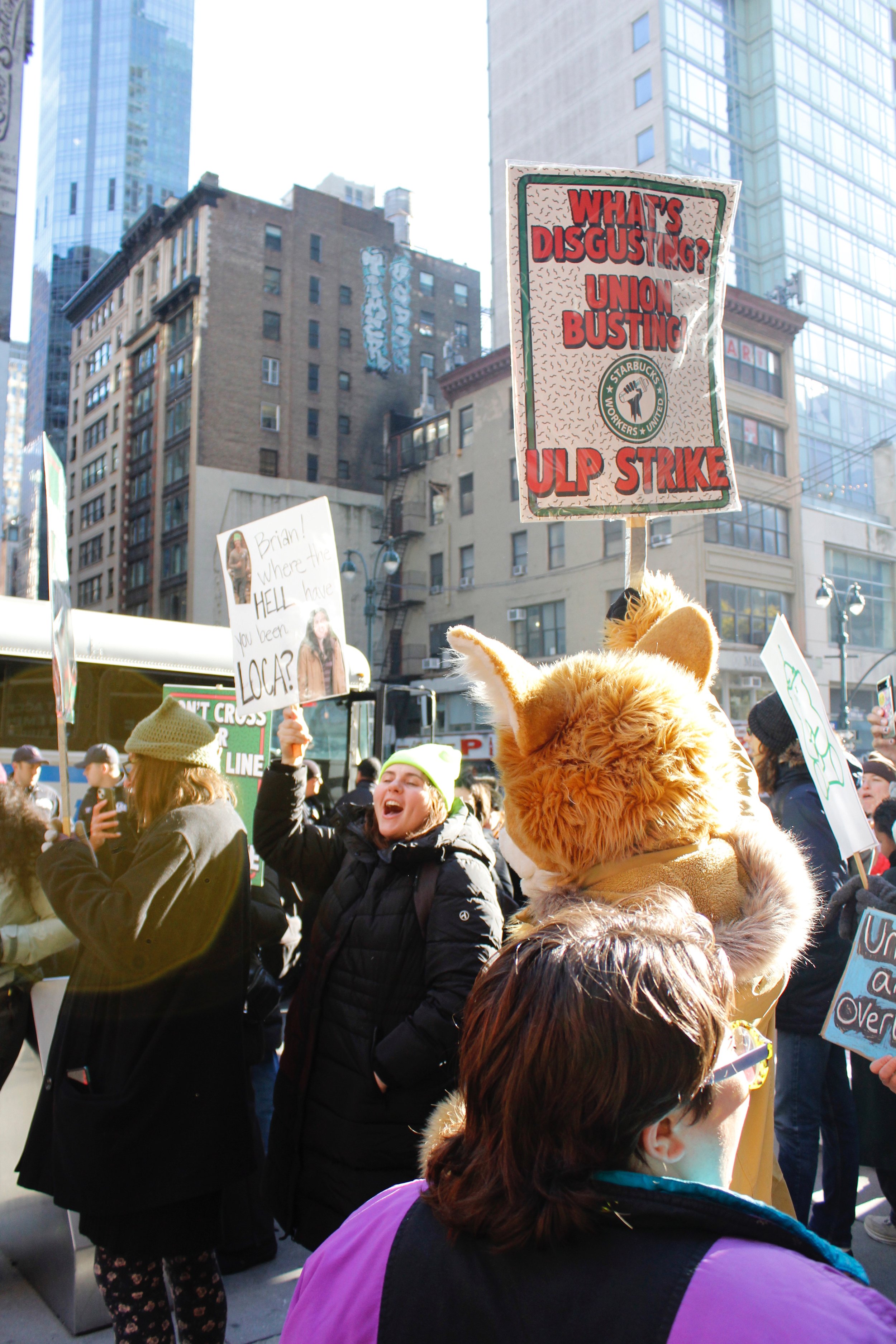
Image courtesy of Starbucks Workers United
What is Starbucks Workers United?
Starbucks Workers United is the labor union representing Starbucks baristas across the United States. It is affiliated with Workers United, a national union. The campaign began in December 2021 when baristas at a single Starbucks location in Buffalo, New York voted to unionize, the first successful union election in the company's U.S. history. Since then, Workers United has won union elections at nearly 700 Starbucks locations, making it one of the fastest-growing union campaigns in the modern U.S. labor movement.
Meet Our Guest
Megan Erickson is a community organizer and union Starbucks barista who helped create the Philadelphia strike kitchen and pantry that kept union baristas and their families fed throughout the three months they were out on strike. She recently graduated with a bachelor’s degree in sustainable food systems and centers her work on helping local communities design sustainable, resilient, people‑driven programs that reflect their needs and values.
Starbucks, Union Busting, and the Fight for a First Contract
In December 2021, baristas at a single Starbucks location in Buffalo, New York, voted to unionize. Over four years later, the union continues to grow and has won elections at nearly 700 locations.
Every day across the U.S., Starbucks workers clock in short-staffed, learn their schedule only days beforehand, and take home paychecks that don't cover rent. After nearly two years of negotiations, baristas are still without a first contract. In February 2024, Starbucks committed to a first master contract. Then came Brian Niccol. The new CEO arrived in September 2024 with a compensation package 6,666 times the pay of Starbucks' median worker – the largest CEO-to-worker pay gap of any S&P 500 company – and within months, contract negotiations had effectively collapsed.
What followed was a $1 billion restructuring plan that shuttered hundreds of locations. Among the closures were nearly 10% of all union locations. With employees at some locations finding out about their store closure on social media and others showing up to their shifts only to find the doors locked and the building empty. Starbucks is the most prolific violator of labor law in modern U.S. history. More than 1,100 unfair labor practice charges have been filed against the company since the start of the union’s campaign for things like retaliation for organizing and illegal unilateral workplace policy changes.
Ahead of the company's March 25th annual shareholder meeting, a coalition of long-term investors is urging shareholders to vote against the reelection of two board members – citing years of backsliding on labor relations that the board has failed to address.
What was the Starbucks Red Cup Rebellion strike?
The Red Cup Rebellion refers to the series of national strikes launched by Starbucks Workers United. The most recent one, beginning in November 2025, became the longest national unfair labor practice strike in Starbucks' history. More than 12,000 workers from 670 stores across the country walked off the job. The strike was named after Starbucks' annual holiday red cup promotion, one of the busiest and most profitable periods in the company's calendar, during which workers chose to withhold their labor. Demands included an end to union busting, fair pay, reliable hours and scheduling, and enforceable workplace protections. Many workers returned to stores in early 2026, though strikes continue in parts of the country.
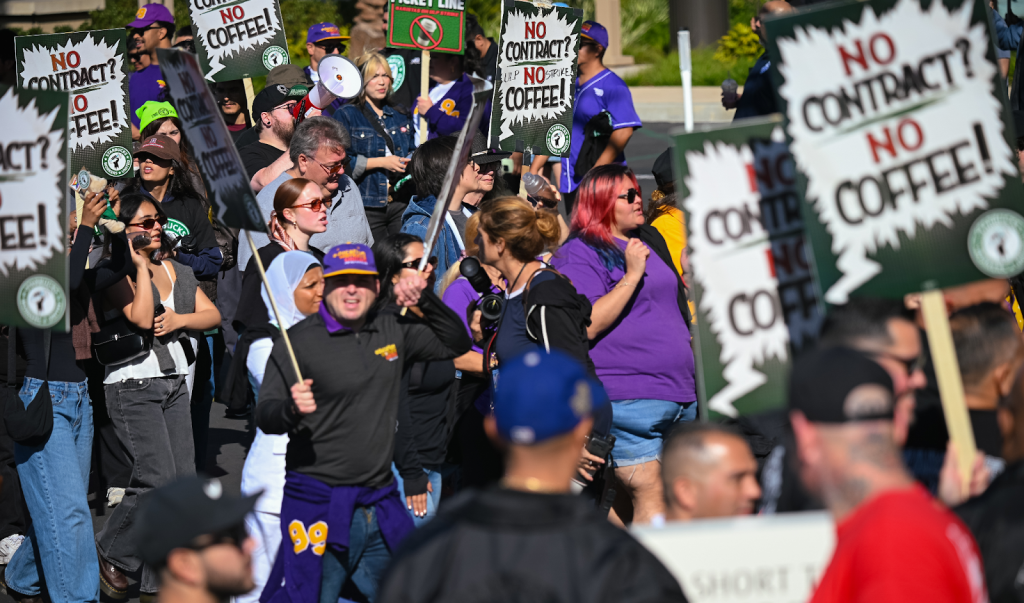
Photo Courtesy of Starbucks Workers United
Starbucks Union Negotiations
Starbucks Workers United: “National framework bargaining began in April 2024. Over the subsequent nine months, baristas and Starbucks executives met for hundreds of hours and notched 33 tentative agreements that will tangibly improve the workplace. In September 2024, union baristas first presented a set of economic proposals for negotiation to increase wages and benefits. In December 2024, Starbucks said “no” to all of baristas’ proposals and, in exchange, put forth an unserious economic package that did not raise wages in the first year of the contract, nor did it address the core issues of hours and staffing.”
Starbucks’ failure to negotiate in good faith on economic proposals was the basis for a national unfair labor practice charge in December 2024. This ULP was amended and expanded in April 2025.
Does Starbucks Pay Workers $30 an Hour?
Starbucks' $30 per hour figure is a total compensation number, not an hourly wage. It is calculated by adding the full dollar value of every benefit the company potentially offers to the base hourly wage, then averaging that across hours worked. In the technology industry, this is commonly referred to as "total comp." It is not the number that appears on a barista's paycheck.
What Do Starbucks Baristas Actually Earn?
The actual starting wage for baristas in most U.S. states is $15.25 per hour. The $30 figure requires receiving the full benefits package – which, by design, most Starbucks workers never qualify for.
Starbucks controls both the hours it schedules workers and the hours threshold required to qualify for benefits. The company schedules the majority of its baristas at an average of 19 hours per week, just below the cutoff to qualify for the full benefits package. Workers who do not meet the hours threshold do not receive the benefits factored into the $30 total compensation figure. Many Starbucks baristas rely on SNAP benefits and Medicaid to cover food and healthcare costs. Because Starbucks sets both numbers, it can keep workers perpetually just under the eligibility line. Workers are also required to keep their availability open for scheduling, meaning they must stay broadly available while receiving no guarantee those hours will be filled.
Why Don't Most Starbucks Workers Qualify for Full Benefits?
The $30 figure requires scrutiny. Presenting total compensation as equivalent to an hourly wage obscures the conditions under which that full value would actually be received. For the majority of Starbucks baristas, who are deliberately scheduled below the benefits threshold, the $30 figure does not reflect their real earnings. Starbucks Workers United and labor advocates argue the framing is designed to overstate worker compensation in the context of contract negotiations and public discourse around the strike.
What are Starbucks Workers United's contract demands?
Starbucks Workers United: “We’re demanding an end to union busting and a fair contract that locks in fair pay, reliable hours and scheduling, and real protections. Right now we’re constantly understaffed, and baristas are often scheduled below the threshold to qualify for benefits.” This includes:
A wage floor of $17 per hour, with 4% annual raises built into the contract.
Hours allocated to existing workers before new hires are brought on.
A minimum of three workers on the floor at all times.
Reliable, predictable scheduling.
Enforceable protections for resolving workplace disputes.
A worker seat at the table on health and safety decisions.
Accountability and back pay for hundreds of ongoing, unresolved unfair labor practice violations.
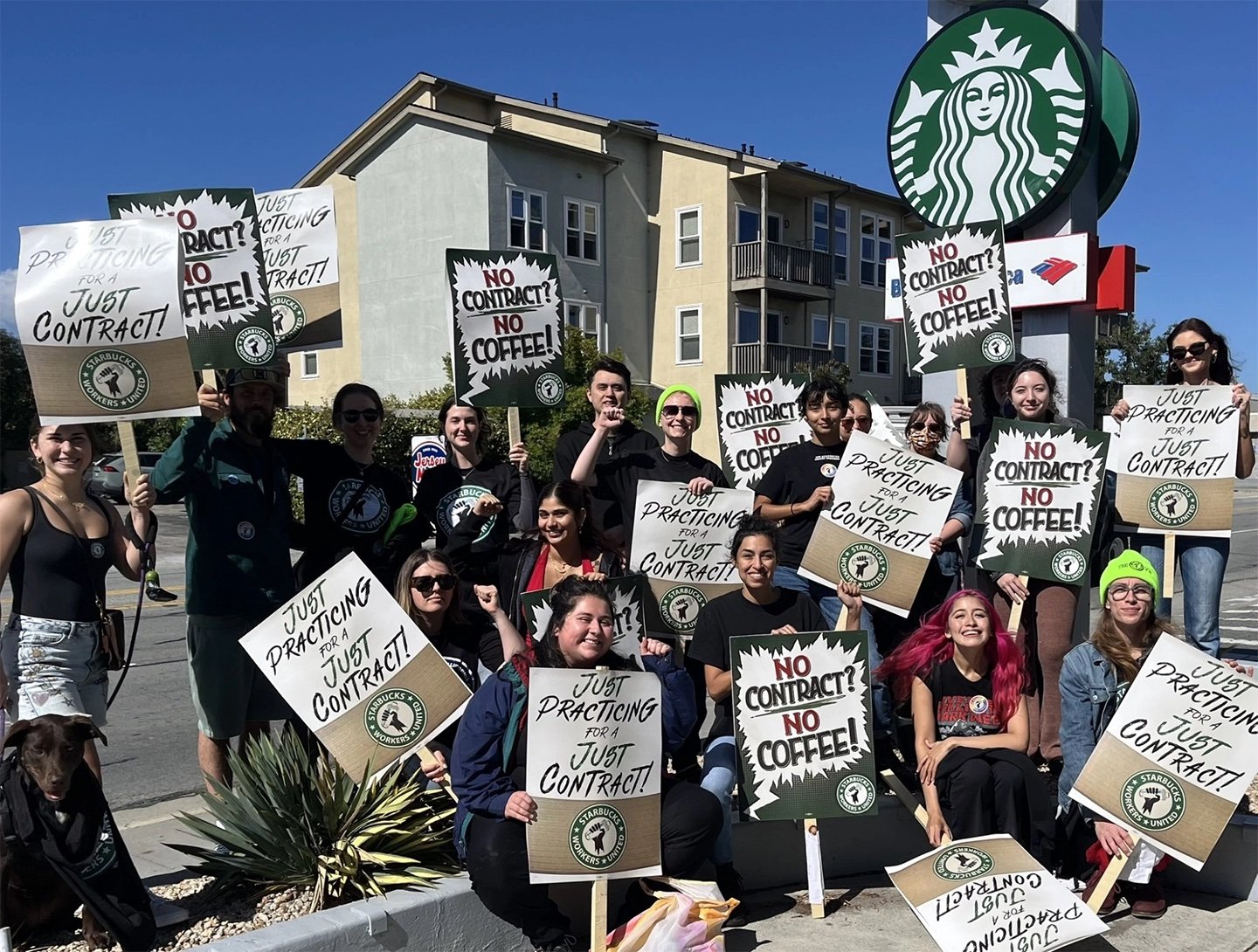
Photo Courtesy of Starbucks Workers United
What is union busting, and what tactics has Starbucks used?
Union busting refers to employer tactics used to stop workers from organizing or to undermine existing unions. Documented Starbucks tactics include: hiring lawyers specializing in anti-union strategy, controlling information flow between workers and management, closing unionized stores, firing pro-union workers, threatening job loss, stalling negotiations, and making unilateral changes to working conditions during bargaining.
According to the Economic Policy Institute, “Starbucks has engaged in an enormous unlawful union-busting campaign. The number of unlawful anti-union charges facing Starbucks is almost certainly the largest in the 90-year history of the NLRB.”
Starbucks Workers United: “Starbucks is the biggest violator of labor law in modern history. More than 1100 charges have been filed against the company since the start of our campaign, for things like retaliation for organizing and illegal unilateral workplace policy changes. Hundreds of those charges are still unresolved, and we’ve filed over 200 ULPs in the last year alone as their illegal union busting activity continues. “
What is good-faith bargaining under U.S. labor law?
Under the National Labor Relations Act (NLRA), once workers vote to unionize, the employer is legally required to bargain in good faith with the union. This means meeting at reasonable times, exchanging proposals, and genuinely attempting to reach a collective bargaining agreement. It does not require agreeing to every demand, but it does prohibit indefinitely stalling, refusing to engage on key proposals, or making unilateral changes to working conditions while talks are underway.
Starbucks Workers United: Recently, Starbucks started saying they’ll go back to the bargaining table—but simply going to the bargaining table is pointless without Starbucks’ commitment to offer new proposals that address baristas’ demands on increasing hours and staffing, raising pay, and resolving hundreds of unfair labor practices.
What is happening with the NLRB and federal labor enforcement?
The National Labor Relations Board (NLRB) is the federal agency responsible for enforcing U.S. labor law, including overseeing union elections and investigating unfair labor practice charges. The current administration fired the NLRB's general counsel, who had directed the agency to pursue stronger remedies for workers fired for organizing. Her replacement comes from Morgan Lewis, a law firm known for representing corporations in union-busting cases and the same firm currently representing corporations the NLRB is charged with holding accountable. We talked about Morgan Lewis on this podcast in episode 22 about union busting at REI.
Starbucks Shareholder Pressure
Ahead of Starbucks' March 25, 2026 annual shareholder meeting, a coalition of long-term investors is urging shareholders to vote against the reelection of two board members, citing years of deteriorating labor relations the board has failed to address.
Starbucks Workers United: “We stand with investors in highlighting the urgent need for a union contract. Starbucks’ success relies entirely on the labor of baristas—from every drink made to every spill cleaned. While we embrace the vision of Starbucks being the ‘Best Job in Retail,’ that promise remains unfulfilled. Achieving true stability for the company and its employees starts with a fair and equitable agreement.”
Has any Starbucks location ever had a union contract?
In the United States, no. As of early 2026, no Starbucks location has a ratified first contract, despite the union winning its first election more than four years ago. In February 2024, Starbucks committed to reaching a first master contract by the end of the year. That deadline passed without an agreement. National framework bargaining began in April 2024 and produced 33 tentative agreements over nine months, covering approximately 98% of contract terms. The core economic package covering pay, hours, and staffing has not been resolved.
The Chile Precedent: Proof a Starbucks Union Contract Is Possible
Outside the United States, Chile is the clearest proof that a Starbucks union contract is possible. Chilean Starbucks workers were the first to unionize, in 2009, and today have a national contract covering 176 stores. Two-thirds of the country's roughly 1,800 Starbucks workers are union members. The path was not quick or easy. It took from 2009 to 2022 to achieve a real contract as a result of years of organizing.
Starbucks' response to the Chilean union closely mirrored its U.S. playbook. Between 2009 and 2012, the company broke every single labor law, spelling out its illegal policies in internal documents, making it the most fined company in Chile. At one point, Starbucks enlisted the help of a pro-employer union in Mexico to spy on the Chilean union's strategy and report back to management.
Support the Podcast
Art of Citizenry is 100% listener-supported. Every contribution helps us continue producing research-intensive episodes and paying our small but mighty team. If this episode resonates with you, consider supporting our work:
Thank You for Listening
Please subscribe and leave a five-star review for Art of Citizenry wherever you listen to podcasts. Also, follow along and share your thoughts on Substack - artofcitizenry.substack.com