
Episode 36: Techno-Orientalism & Reimagining Sci-Fi with Elaine U Cho
In this episode of the Art of Citizenry Podcast, host Manpreet Kaur Kalra is joined by author Elaine U. Cho in conversation about her new sci-fi novel Teo’s Durumi. Together they unpack techno-orientalism – exploring how her work contends with capitalism, colonialism, and identity – and why using our unique lens in art matters now more than ever.
This episode invites you to think critically about how narratives of the future are shaped and who gets to author them. Elaine’s reflections on diaspora, cultural authenticity, and resisting reductive tropes are not just lessons for sci-fi writers, but for anyone grappling with representation in storytelling.
During this conversation, we explore:
Identity & diaspora: Wrestling with the question “Am I [blank] enough?” and writing through the tension of layered identities.
Orientalism & Techno-orientalism: From Edward Said’s groundbreaking critique to sci-fi tropes that flatten and exoticize Asian cultures.
Cultural Hegemony in Literature: Resisting the pressures of making her work “palatable” to a mainstream audience by embracing specificity, language, and cultural nuance.
📚Be sure to check out Elaine U. Cho’s book, Teo’s Durumi and debut Ocean’s Godori
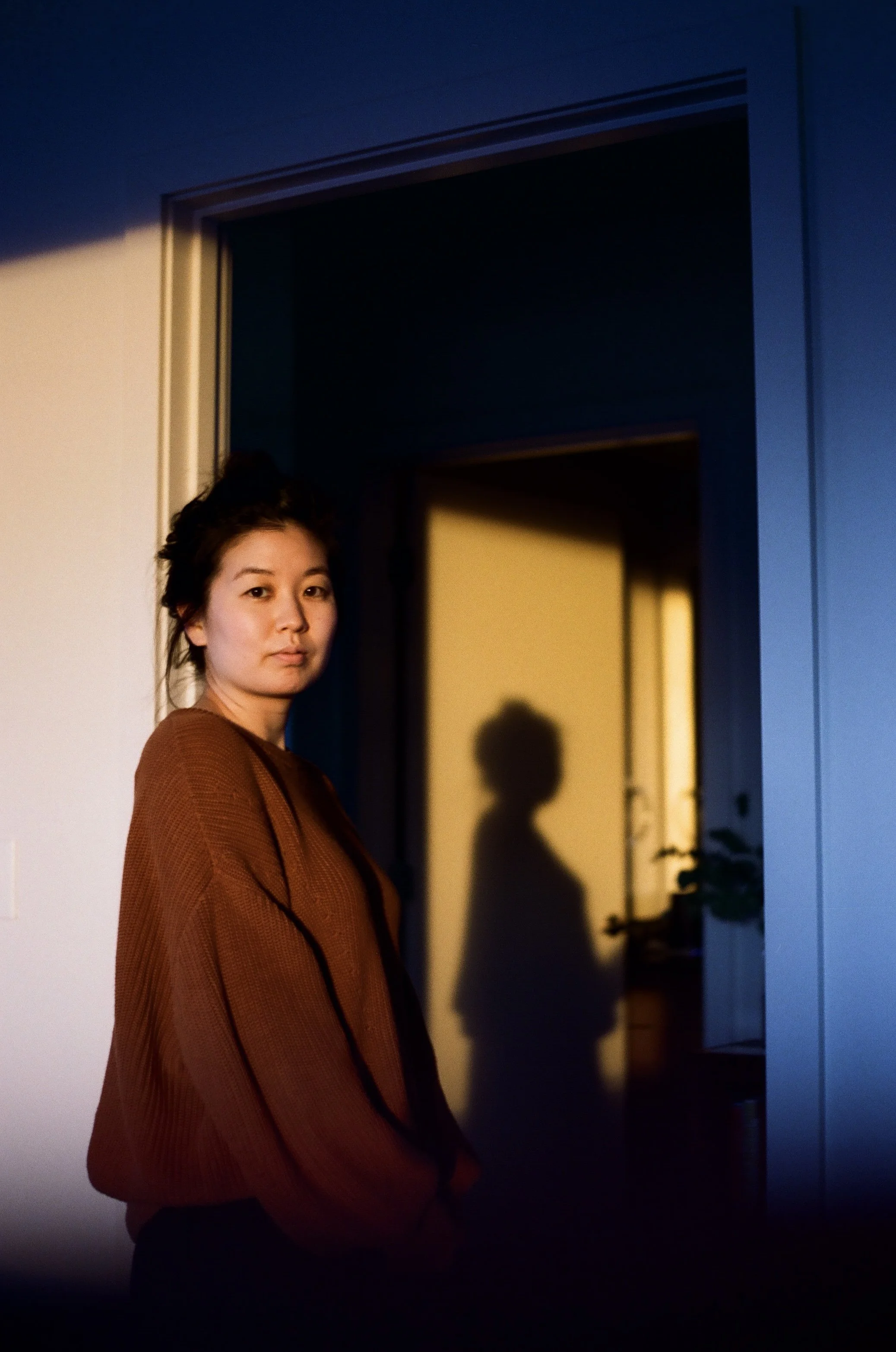
Meet the Guest
Elaine U. Cho (she/her) is the author of Ocean’s Godori and Teo's Durumi. She has an MFA in flute performance from CalArts, and is a former film critic, former bookseller at Elliott Bay Book Company, and current associate editor for Shelf Awareness. She has worked for various arts non-profits in Seattle, including ArtsWest and Bushwick Book Club, and is a Kyūdō practitioner.
Writers of color are “…more familiar with that sensation of being decentered anyway, or of being told our experience is not accessible and requires translation. I don’t think people realize how much they’re limiting themselves when they attempt to limit us in that way. Writing specifically rather than with this “broader audience” in mind can and should be an invitation to readers: step into my world.” — Elaine U. Cho
Q&A with Elaine U. Cho 📝
Read the full Q&A on Substack!
Sci-fi is a predominantly white genre, with BIPOC characters often playing supporting roles. How has techno-orientalism shaped the sci-fi literary industry?
Techno-orientalism has consciously and unconsciously shaped the western sci-fi literary industry…in often positing the people or cultures of “the orient” as the foreign factor. The inclusion of Asian language or culture in technology or the setting has served as a signifier or shorthand that the characters are living in the future or some alternate present. This can manifest in a reverence of the culture or a fear of it…but it generally, as orientalism often did, results in the othering and flattening of the culture.
It has historically not only set the western world apart but also in a vantage point of superiority. When done consciously, techno-orientalist tropes can be utilized as a thoughtful critique, but techno-orientalism unconsciously pervades so much of sci-fi literature just because the usage was common in the literary and visual vocabulary that has built the genre.
It’s been wonderful to see so much more diversity in the genre in even the past decade with BIPOC authors writing about the world through their lenses in what should be a vast and welcoming genre.
How do you see science fiction as a vehicle to explore and critique systems of power?
Speculative fiction has always provided a useful lens to explore, critique, and recontextualize ideas…The sci-fi genre often takes place in the future, but I believe that the genre is very much involved with the present; it’s wrestling with present-day concerns or what’s troubling us now.
I’ve heard the saying that “normal” is the tool of the powerful to maintain the status quo, but science fiction allows us to challenge the idea of normality—whether it’s with alien races, quantum leaps, or an anarchist utopia—and thus the idea that there’s nothing we can do to change it.
Often, writers of color are expected to translate or explain cultural references for broader audiences—whereas white writers can assume their cultural lens is the default. How do you navigate that double standard—pushing back against the idea of whiteness as the norm?
I felt more freedom as a sci-fi writer, because I was writing in the construct of a genre that usually involves unfamiliar words, culture, and settings…That approach might be seen as stubbornness, but I prefer to think of it as trusting the audience. I don’t think readers should expect to go into a book recognizing every word or cultural point.
The world is vaster than any one person’s limited knowledge…The written word is fantastic because it brings readers into completely unfamiliar experiences and allows them to thereby gain empathy. It also decenters the reader, because they’re now inside a narrative where they themselves aren’t the main character. Writing specifically rather than with this “broader audience” in mind can and should be an invitation to readers: step into my world.
On Orientalism:
When we talk about Orientalism, we’re talking about a way the “West” aka Euro-American societies have historically represented and exotified “the East” – the Middle East, North Africa, and Asia. These depictions weren’t just harmless stereotypes. They often served to justify colonial domination, framing entire cultures as backwards or in need of control.
While Orientalism had been around for a while as an area of artistic and academic inquiry, it was popularized by Palestinian American scholar, Edward Said in his groundbreaking book Orientalism in 1978 in which he argued that these representations were not neutral but part of a “discourse of power” that reinforced Western hegemony. They were part of a bigger system of power, a way for Euro-Americans to maintain authority by shaping how people imagined the other.
On Techno-Orientalism:
Building on Said’s framework, the idea of “techno-orientalism” extends this critique into the realm of technology and media. This shows up a lot in film, TV, and pop culture. It’s the idea that Asian cultures are futuristic and technologically advanced, but also somehow cold, alien, or dehumanizing. So instead of camels and deserts, it’s robots and neon. What stays the same, though, is that sense of “othering.” It’s still about using images of Asia to project Western fears and fantasies, just updated for the age of technology.
In this framing, the West positions itself as the source of higher consciousness, humanism, and moral leadership. Techno-orientalism stereotypes that while Asia may churn out gadgets and efficient systems, it still supposedly needs Western enlightenment to unlock “real” progress. This contradiction is important because it doesn’t just live in pop culture—it echoes in policy, economics, and education. The image of Asians as both simultaneously brilliant and savage reinforces the idea that Western intervention or guidance is necessary. It’s the same old colonial logic, dressed up for a world of microchips and AI.
“…so much of western sci-fi has been predominantly white, which isn’t an accurate depiction of the world at all. And that depiction can unconsciously influence biases about who the people with agency are in the world, and who the world belongs to.” — Elaine U. Cho
Mentions and References:
Support the Podcast
Art of Citizenry is 100% listener-supported. Every contribution helps us continue producing research-intensive episodes and paying our small but mighty team. If this episode resonates with you, consider supporting our work:
💸 One-time contribution: Paypal
💌 Monthly support: Patreon
✍️ Subscribe to us on Substack & upgrade your account to paid
Thank You for Listening
Please subscribe and leave a five-star review for Art of Citizenry wherever you listen to podcasts. Also, follow along and share your thoughts on Substack - artofcitizenry.substack.com.