
Episode 55: Bangladesh Garment Workers Fight for a Fair Minimum Wage
Thousands of garment workers in Bangladesh have taken to the streets demanding a higher minimum wage. Bangladesh is the world’s second largest clothing manufacturer, with its garment industry employing 4.4 million workers. Bangladeshi garment workers earn some of the lowest wages in the global apparel industry while the executives and shareholders of the world’s largest fashion companies – H&M, Zara, Gap, Uniqlo, Wrangler, Primark, Marks & Spencer, etc. – continue to profit immensely.
The global fashion industry is run by billionaires who profit from the exploitative supply chain conditions they have normalized and enabled through their purchasing practices. As living costs climb, the gap between a paycheck and the cost of getting through the month means that each day garment workers are forced to make decisions on whether to skip meals, pull their children out of school, work unsustainably long hours, or take on more debt.
In this episode, I’m joined by Anne Bienias, Living Wage Coordinator at Clean Clothes Campaign, to unpack what garment workers are fighting for, the repression they face, and how fashion’s supply chains under late-stage capitalism concentrate wealth at the top while leaving the people making our clothes struggling to survive.
Garment workers continue to protest in the face of unlawful violence. Over the past few weeks, protests have been confronted with mass arrests, violence, and tear gas, with one garment worker already killed after being beaten. Their fight raises a question the fashion industry keeps leaving unanswered: Why is paying workers a living wage so controversial in an industry that keeps lining the pockets of billionaires with even more money?
🚨TAKE ACTION: Join Clean Clothes Campaign’s email action and tell major fashion brands to publicly back garment workers’ wage demands. Add your name and send the email!
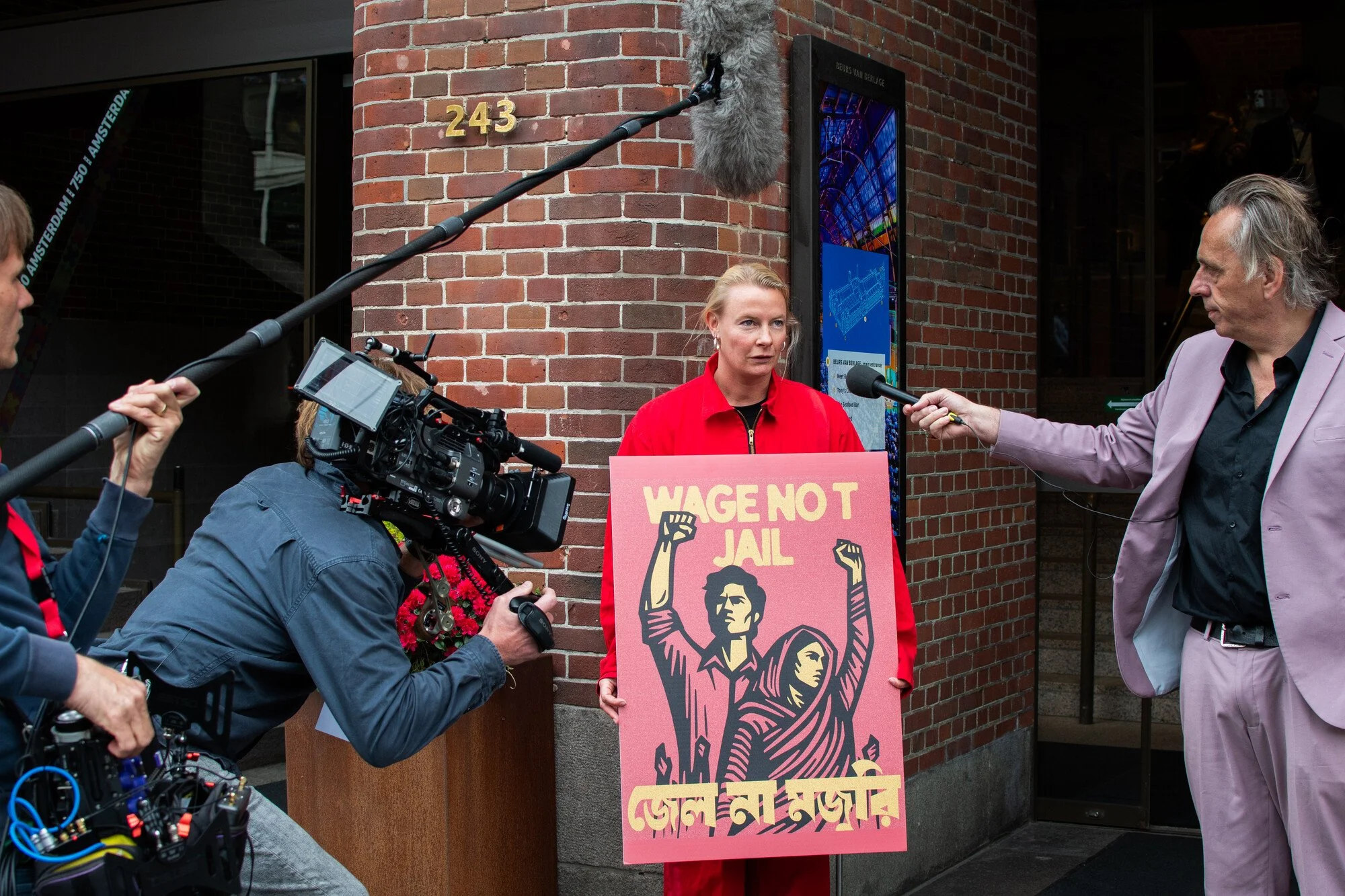
Image of Anne Bienias of Clean Clothes Campaign Joining Garment Workers in Solidarity
Clean Clothes Campaign
Anne Bienias is a labour rights and human rights activist. She is the Living Wage Coordinator at Clean Clothes Campaign, where she has worked for ten years. Her work focuses on garment workers’ wages, corporate accountability, and support for workers organizing for better pay.
Clean Clothes Campaign is the largest international network of trade unions, labour rights organizations and human rights defenders that work together to improve labour conditions and wages in the global garment industry. Learn more about their work!
The episode’s opening includes a briefing by Kalpona Akter, a labor rights activist, former child garment worker, and Executive Director of the Bangladesh Center for Worker Solidarity.
You can tune into the full brief here.
Bangladesh garment workers are demanding 32,000 taka
The demand begins with what it costs to live. Anne explains how cost-of-living studies account for nutritious food, adequate housing, education, healthcare, transportation, and a small cushion for unexpected expenses.
The 2023 wage negotiations ended with a monthly minimum of 12,500 taka, against workers’ demand for 23,000 taka. Comparing the new demand only with the existing minimum can make the proposed increase look extraordinary while overlooking how inadequate that earlier wage already was.
What is a Wage Board?
In Bangladesh, a wage board brings together representatives of the government, employers, and workers’ unions to negotiate a proposed minimum wage for a particular industry. The government then decides whether to approve that proposal.
Under International Labour Organization (ILO) standards, the Wage Board must make a decision by looking at economic factors, including the garment industry’s ability to compete, and weigh those alongside what workers and their families need to live. But who represents workers matters. A seat at the table only means so much if the people sitting there are able to truly advocate for workers’ needs and have those needs considered.
The Violent Repression Facing Bangladesh’s Garment Workers
Protesting garment workers are being confronted with unlawful violence – police batons, tear gas, and mass arrests. One garment worker, Toufiq Hossain, has already been killed after being brutally beaten. Labor leaders have been reportedly detained on accusations of incitement, while police file cases under the Anti-Terrorism Act as a tool to intimidate and repress.
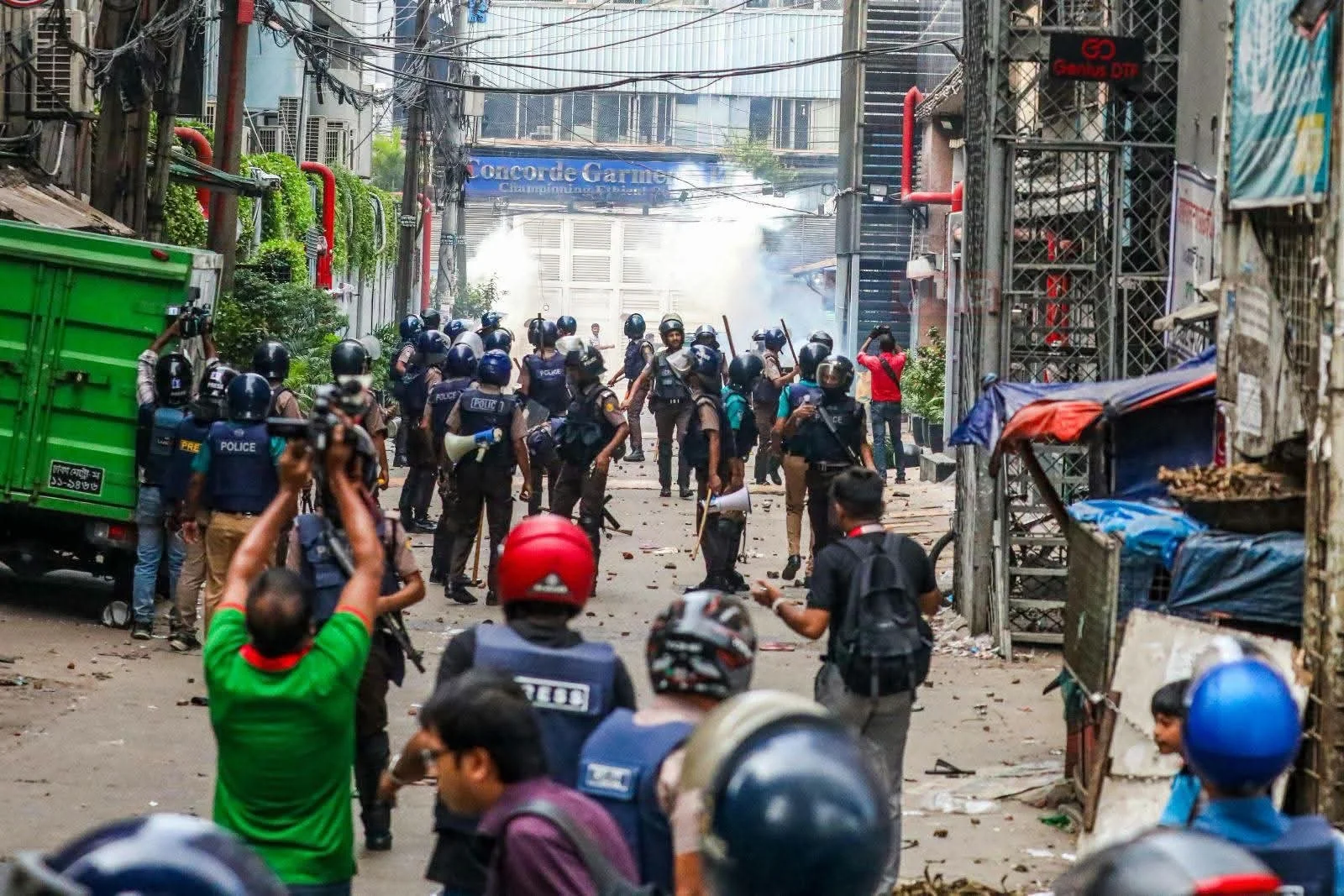
Image Courtesy of: Clean Clothes Campaign
Q&A: How do fashion brands’ purchasing practices affect garment workers?
Manpreet: In your recent survey of nearly 1,100 garment workers, almost nine in ten said their wages fell short of their families’ basic expenses. What does that tangibly mean for garment workers and their families?
Anne: We interviewed workers across seventy-three different factories, and we got a variety of different answers. But the most common one was that people were either taking out loans, working a second job, or working extra overtime in the factory where they are working already. Some people were borrowing money from friends or family members, but other people go the other way around and try to cut costs. So they do that by skipping meals, not sending their children to school, or not accessing the healthcare system when actually they should. So these are ways that people are trying to survive in Bangladesh on a day-to-day basis.
I've been with Clean Clothes Campaign for 10 years already, and I've always worked on the topic of living wages. So these kinds of statistics are really not new to me. But sometimes what scares me a little bit is how normal these numbers are starting to feel. But I think if you truly let it sink in what it means, as a parent or a sister or a brother, to not be able to take care of your family in the way that everyone would love to take care of themselves and their family, it’s horrible in 2026. And then you realize that they are part of a supply chain.
It's not a matter of there not being any money available in this supply chain. We know that there are several CEOs or founders of brands in the top 50 of the Forbes list of richest people on the planet. We see the profits that the biggest brands are making every year. So there is definitely value in this chain. It's just very concentrated at the top. It's important to understand that workers who work in garment factories in Bangladesh, but also elsewhere, every day to make T-shirts and jeans or whatever we are wearing are suffering every day.
Manpreet: When a global brand places an order, it makes decisions about price, deadlines, and whether to keep buying from that factory. How do those decisions affect workers’ wages and job security?
Anne: You are right. Brands make these kinds of decisions on a daily basis. A lot of brands will say that they're investing heavily in buying from the same suppliers, which, to a certain degree, is also true. We know that brands don't change their factory lists every week. Usually, there is some consistency in that. However, we also know that circumstances like the COVID pandemic or earlier this year when the US announced these tariffs… brands are then very quick to move orders away.
For example, Cambodia is also very dependent on garment exports. And what we saw was that a lot of brands didn't have to think a day. They shifted their orders to other countries immediately. The same thing happened during COVID. Brands cancel orders. They place orders elsewhere where they can find a cheaper price. They delay payments, which also, of course, creates issues, right? Because it creates cash flow issues for the factories, who then might not be able to pay the workers of the factory.
So brands are the most powerful player in this industry. They dictate the prices. They dictate the timelines. They dictate everything. So if brands take decisions like moving away their orders, this does have real effects on workers. They might lose their job. This is also why we never call for boycotts, for example. They might not get paid, or they might not get paid in time. All these kinds of things have an immediate effect on workers in Bangladesh or elsewhere.
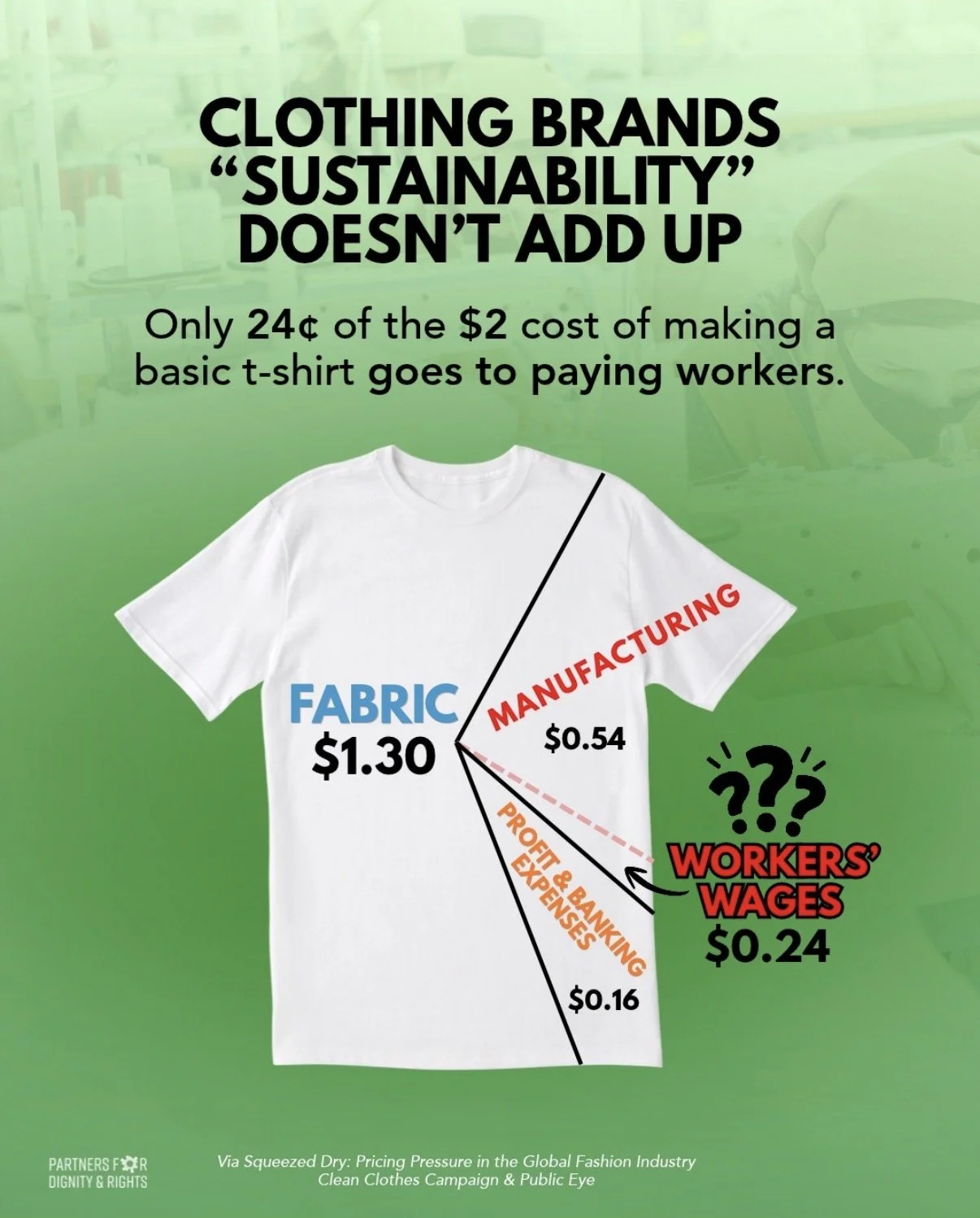
Image Courtesy of Partners for Dignity & Rights
Manpreet: What does absorbing the cost of their purchasing model mean practically for brands?
Anne: So that means that you increase the price that you pay to the factory for a product. Research that we did earlier this year shows that the current price that a lot of brands are paying to their factories for the production of a cotton T-shirt in Bangladesh is roughly two dollars. Out of those two dollars, only roughly 20 cents is reserved to go to the wages of workers. So that's roughly 10%. For some items, it's even lower. Apparently, paying $2 allows the factory to pay all the workers the minimum wage that they are supposed to receive. But if the minimum wage goes up, obviously the price should also increase, right? Because the labor costs for the factory have increased.
But instead of putting that fully on the factory owner, we want brands to increase the price that they are paying to the supplier to take away the pressure on the supplier, because brands can more easily carry that burden. That's where the profits are made, and that's where shareholders are receiving dividends every year. So absorbing the increased labor cost means that brands should pay a higher price to their suppliers in Bangladesh.
What should brands sourcing from Bangladesh do?
Publicly support workers’ demand for a minimum wage of Tk 32,000 per month.
Publicly commit to continuing to source from Bangladesh after the minimum wage increase.
Call on your suppliers, the BGMEA and the BKMEA to support and fully implement the Tk 32,000 minimum wage.
Increase your purchasing prices to fully absorb the additional labour costs.
Take effective measures to prevent violations of workers’ rights during the wage negotiations and protests.
Additional Resources + Readings
Clean Clothes Campaign – Campaign page for 2026 higher minimum wage protests
Press Briefing – Overview of updates on the 2026 Bangladesh minimum wage negotiations
Squeezed Dry: Pricing Pressures in the Global Fashion Industry – a report by Public Eye in collaboration with Clean Clothes Campaign published in May 2026
The Affordability Crisis is Global. Billionaire Greed is the Cause. – Naming the billionaires profiting off of the garment industry.
Anker Research Institute - 2026 Living Wage Update Report: Living Wage Report for Dhaka and Satellite Cities, Bangladesh
Fashion Checker – Are the people who make your clothes paid enough to live on?
Global Press Journal on garment workers after the Monsoon Revolution
Aljazeera - Bangladesh police clash with garment workers amid protests over wages
Reuters - Behind Bangladesh's garment boom, workers cut food, healthcare as wages fall short
Clean Clothes Campaign - What are the issues plaguing fashion?
Human Rights Watch – Bangladesh Labor Protests Turn Violent
Oxfam 2019 Report – Made in Poverty: The True Price of Fashion
Support the Podcast
Art of Citizenry is 100% listener-supported. Every contribution helps us continue producing research-intensive episodes and paying our small but mighty team. If this episode resonates with you, consider supporting our work:
Thank You for Listening
Please subscribe and leave a five-star review for Art of Citizenry wherever you listen to podcasts. Also, follow along and share your thoughts on Substack - artofcitizenry.substack.com.